Healthy breakfast: how to build one that keeps you going until lunch
 Checked by Adrian Ienin, pharmacist · updated
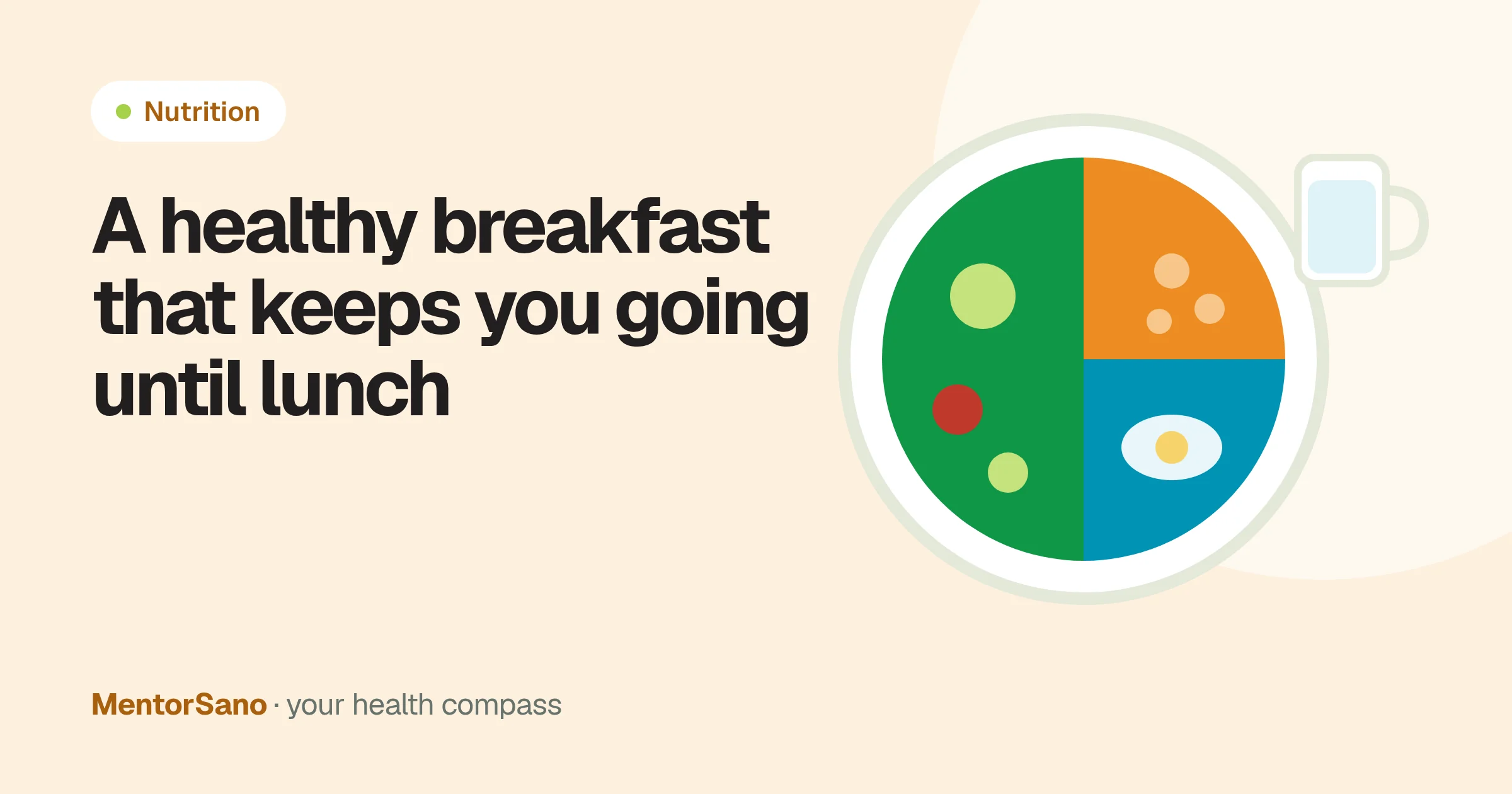
A healthy breakfast keeps you full until lunch without the 11 o'clock energy dip. The simple rule: a source of protein (eggs, yoghurt, cheese, beans), a source of fibre (vegetables, fruit, whole grains) and a little healthy fat (nuts, seeds, olive oil). Pastries, sugary cereal and fruit juice on their own fill you up for a short time. You do not have to eat in the morning if you are not hungry.
Want to see what this means for you? Start for free →
What makes a healthy breakfast?
There is no single good breakfast. There is, however, a shape that works for almost everyone: the same proportions as any balanced meal. The Harvard School of Public Health put them in a simple picture, the “Healthy Eating Plate”.
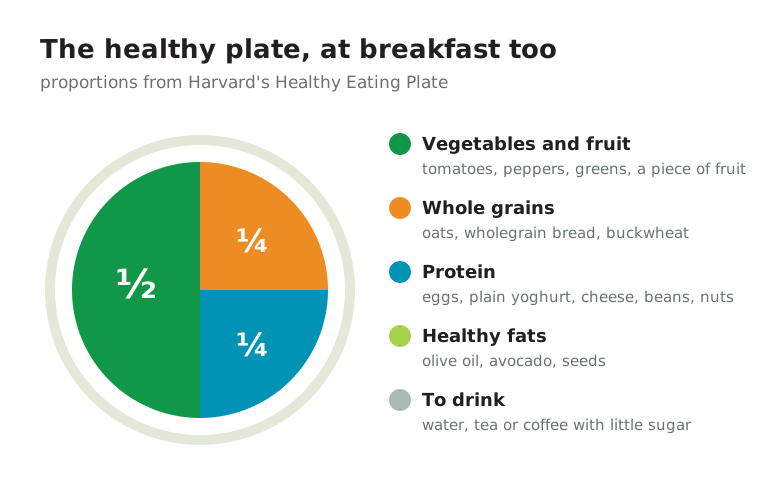
The World Health Organization says the same, briefly: plenty of vegetables and fruit, whole grains, legumes and nuts, and as little added sugar and salt as possible.
Why are you hungry again at 11?
A breakfast made only of refined carbohydrates (croissant, white bagel, sugary cereal, juice) is digested quickly. Blood sugar rises fast and falls just as fast. Two hours later you are hungry again, you crave something sweet and your focus drops.
Protein, fibre and fat slow digestion down. With them, the same amount of food keeps you full for longer. You do not need to give up bread. Choose wholegrain and pair it with some protein.
What to eat for breakfast: 7 ideas
Each idea has protein, fibre and healthy fats. Most take 5 minutes.
| Breakfast | Protein | Fibre |
|---|---|---|
| Two-egg omelette with spinach and tomatoes, a slice of wholegrain bread | eggs | vegetables, wholegrain bread |
| Plain yoghurt with oats, berries and a spoon of nuts | yoghurt | oats, fruit |
| Porridge made with milk, grated apple and cinnamon | milk | oats, apple |
| Wholegrain bread with hummus, cucumber and peppers | chickpeas | vegetables, wholegrain bread |
| Cottage cheese with tomatoes, spring onion and a spoon of olive oil | cheese | vegetables |
| Eggs boiled the night before, a pear and a handful of almonds (on the go) | eggs, almonds | pear |
| Chia soaked overnight in milk or yoghurt, with kiwi | milk, yoghurt | chia, kiwi |
If you are not sure how well you really eat, create your free MentorSano account. You log your meals in the journal and see, week by week, what you change.
What is best avoided in the morning?
- Fruit juice instead of fruit. It has the fruit's sugar, but almost no fibre. Harvard suggests one small glass a day at most.
- Sugary breakfast cereal. Read the label: many have over 20 g of sugar per 100 g.
- Pastries every day. Lots of white flour and fat, little protein and fibre.
- Processed meats. Harvard advises avoiding them. They are salty and processed.
- Coffee with lots of sugar or syrup. Plain coffee or coffee with a little milk is fine for most people.
Do you have to eat breakfast?
No. If you are not hungry in the morning and feel fine until lunch, there is no need to force yourself. What you eat across the whole day matters more than the time of your first meal.
Still, watch how you feel. If you skip breakfast and then eat a lot in the evening, snack on sweets at work or get a headache before lunch, a simple breakfast may help. Children, teenagers, pregnant women and people doing physical work in the morning usually need one.
How do you make breakfast a habit?
- Keep 3–4 options you can make without thinking.
- Prepare what you can the night before: boiled eggs, soaked oats, chopped vegetables.
- Tie breakfast to something you already do: when the coffee is on, make your plate too.
- Change one thing at a time. Wholegrain bread first, protein a week later.
What breakfast can you have on the go?
You do not always have 5 minutes at home. A few simple choices work on the move too:
- At a café: a wholegrain sandwich with egg, cheese or turkey and vegetables, instead of a croissant.
- At the supermarket: a plain yoghurt, a banana or an apple and a handful of nuts.
- At the office: overnight oats in a jar, made at home, with milk and fruit.
- At a petrol station: boiled eggs, if they have them, and a piece of fruit, instead of pastries.
Glance at the label: look for products with protein (at least 10 g per serving is a good sign) and little added sugar.
What is a good breakfast for children?
Children need the same three things: protein, fibre and a little healthy fat, in portions that suit their age. A few ideas they usually enjoy:
- oat and banana pancakes with yoghurt;
- wholegrain bread with no-sugar peanut butter and apple slices;
- an omelette with cheese and cherry tomatoes;
- plain yoghurt with fruit and a little sugar-free muesli.
Brightly coloured cereals with lots of sugar and sweet drinks are best kept as exceptions, not the everyday breakfast.
When to see a doctor
For most people, breakfast is not a medical matter. See a doctor, though, if:
- you have diabetes or take medicines that lower blood sugar and want to change your meal times;
- you get dizzy, shaky or sweaty when you go a long time without food;
- you often have heartburn, stomach pain or bloating after meals;
- you have lost weight without trying.
Frequently asked questions
What should I eat for breakfast to lose weight?
A breakfast with protein and fibre keeps you full for longer, so it helps you avoid snacking before lunch. No breakfast makes you lose weight on its own, though. What you eat across the day is what counts.
Is porridge a healthy breakfast?
Yes, if the oats are plain, not the sweetened kind. Add some protein (milk, yoghurt, nuts) and a piece of fruit.
Can I drink coffee on an empty stomach?
Most people can. If coffee gives you heartburn or stomach pain, have it after food and talk to your doctor if the pain keeps coming back.
How many eggs can I eat for breakfast?
For a healthy adult, one or two eggs at a meal are fine. If you have high cholesterol or diabetes, ask your doctor what suits you.
Is fruit alone a good breakfast?
Fruit is a good choice, but on its own it does not keep you full for long. Add some protein, such as yoghurt, cheese or a handful of nuts, to last until lunch.
Start from where you are today
MentorSano brings together your blood tests, sleep, meals, movement and habits, and Adrian Ienin checks your plan before it reaches you.
- 15-minute questionnaire
- Blood tests, explained
- Daily journal
- Lesson of the day
- An expert by your side
Adrian Ienin
Naturopathic pharmacist, nutrition and holistic health consultant, co-founder of MentorSano. He checks the articles here and the plans in the platform before they reach people.