Low ferritin: what it means and what to ask next
 Checked by Adrian Ienin, pharmacist · updated
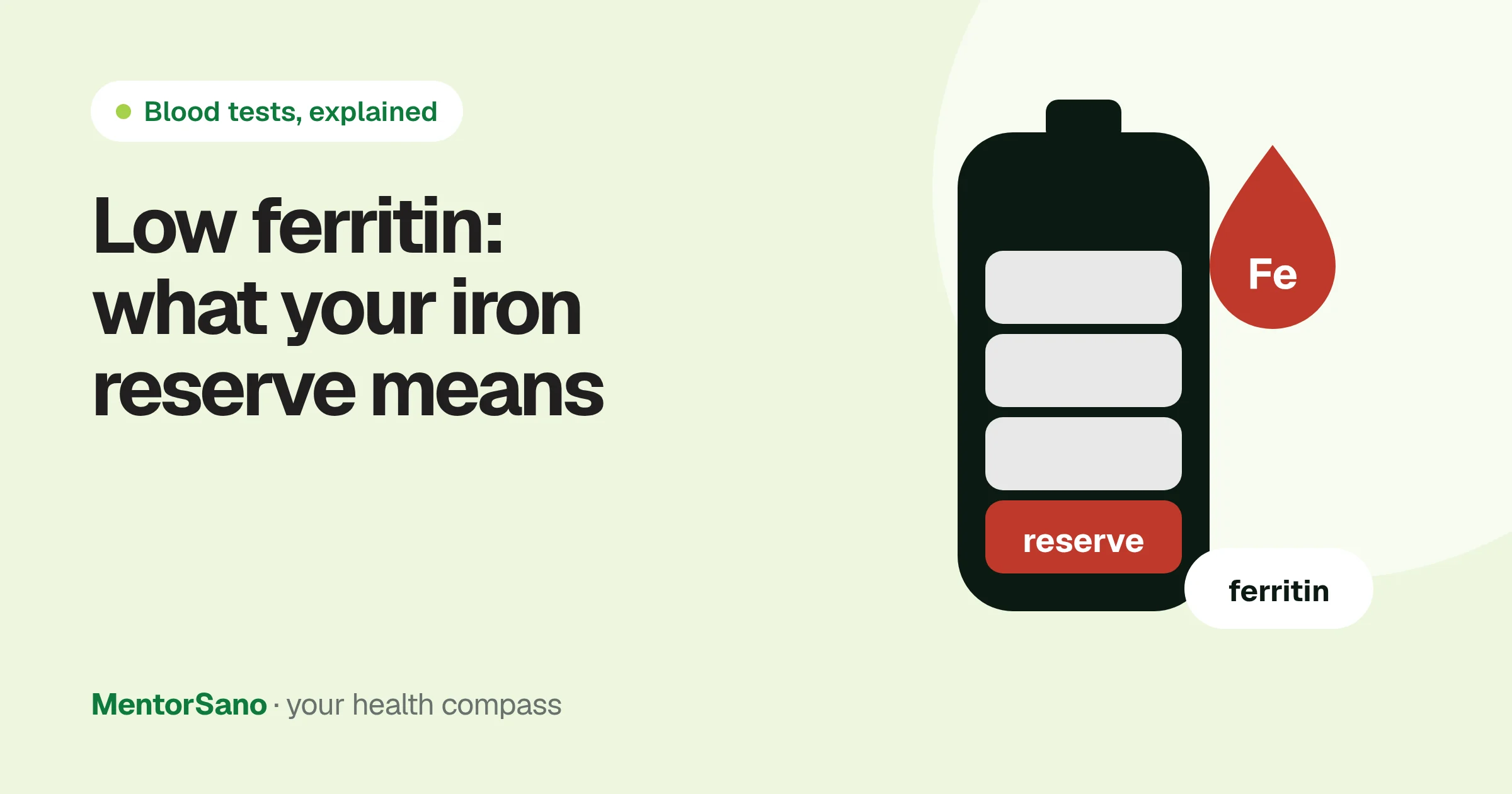
Ferritin shows how much iron your body has put aside. Low ferritin usually means your iron stores are running empty, even while haemoglobin is still normal. It is common in women with heavy periods, after pregnancy, with a diet low in iron or with blood loss. The value is read next to haemoglobin, serum iron and C-reactive protein, and the cause is found by your doctor.
Want to see what this means for you? Start for free →
What is ferritin and what does the test show?
Ferritin is the protein in which your body stores iron. A small part of it reaches the blood, and the test measures it. That is why ferritin in the blood tells you, roughly, how full your iron reserve is.
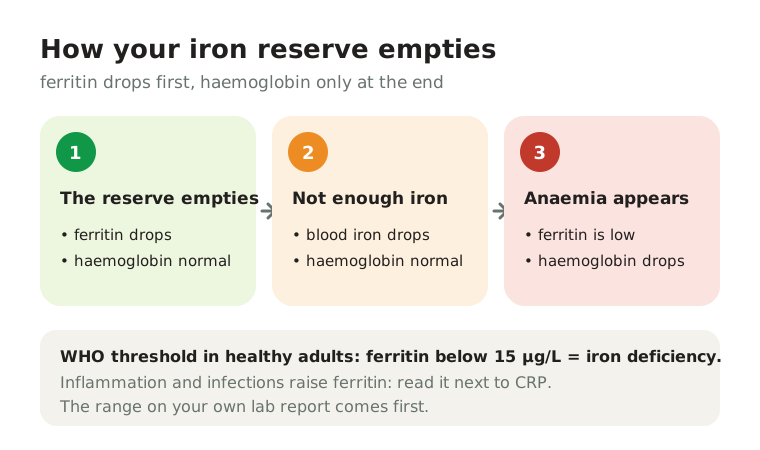
Haemoglobin shows the iron already at work, in your red blood cells. Ferritin shows the iron in reserve. The reserve empties first, and haemoglobin only drops after that.
What does low ferritin mean?
A value below the reference range on your lab report usually means low iron stores. The World Health Organization considers ferritin below 15 µg/L a sign of iron deficiency in healthy adults. Ranges differ from lab to lab, so look first at the one printed on your own report.
Common causes:
- heavy periods;
- pregnancy and breastfeeding;
- a diet low in iron, or poor absorption;
- blood loss, including from the gut, which you may not see;
- frequent blood donation or endurance sport.
If you already have your results, upload them to your free MentorSano account. You see ferritin next to your other tests, in plain words, checked by a pharmacist.
Low ferritin and normal haemoglobin: is that possible?
Yes. It is actually the most common picture early on: the reserve is empty, but the red blood cells are still fine. Some people feel tired, notice hair loss or find exercise harder before haemoglobin drops. Not every kind of tiredness comes from this, so discuss the value with your doctor.
What does high ferritin mean?
Ferritin also rises with inflammation and infection, not only when there is a lot of iron. That is why a high ferritin is read next to C-reactive protein (CRP) and liver tests. A normal value during inflammation can even hide low stores. Your doctor interprets it.
How do you prepare for the test?
- Blood is usually taken in the morning, before breakfast.
- Say if you take iron supplements; your doctor may ask you to stop them before the test.
- After a cold or an infection, ferritin can come out higher than your real reserve.
Which tests are read next to ferritin?
Ferritin on its own tells you how full the reserve is. To see the whole path of iron, your doctor reads it next to a few other tests, usually from the same blood sample.
| Test | What it shows |
|---|---|
| Haemoglobin | the iron already at work, in red blood cells; it drops only once the reserve is empty |
| Serum iron | the iron circulating in your blood right now; it changes from day to day and after meals |
| Transferrin and its saturation | how much iron the transport protein carries; low saturation supports iron deficiency |
| MCV (mean cell volume) | the size of red blood cells; with long-lasting iron deficiency they become smaller |
| C-reactive protein (CRP) | whether there is inflammation, which can raise ferritin and hide low stores |
That is why a single value rarely tells the whole story. In your MentorSano account you see these tests together, on the same report and over time.
What can you eat to support your iron stores?
Food does not replace treatment when the reserve is empty, but it matters so that it does not empty again. The UK's National Health Service (NHS) gives a few simple pointers.
- Iron from meat and fish (lean red meat, chicken, fish, seafood) is absorbed better than iron from plants.
- Iron from plants comes from lentils, beans, chickpeas, tofu, pumpkin seeds, dark green leafy vegetables and whole grains.
- Vitamin C at the same meal helps you absorb plant iron: peppers, tomatoes, citrus fruit, kiwi, cabbage.
- Tea and coffee right at mealtimes reduce absorption. Have them an hour or two later.
- Large amounts of calcium (lots of dairy at the same meal) can also get in the way of iron absorption.
If you eat vegetarian or vegan, you can do well too, but it pays to watch your plant sources and check your results from time to time.
Who should have their ferritin checked?
There is no rule for everyone. Doctors usually ask for it when there is a reason, for example:
- women with heavy or long periods;
- pregnancy and after giving birth;
- people who eat vegetarian or vegan;
- endurance athletes and frequent blood donors;
- bowel conditions that affect absorption, such as coeliac disease;
- tiredness that does not go away, hair loss or brittle nails.
When to see a doctor
- Your ferritin is below the lab's range, especially with tiredness, dizziness or breathlessness on effort.
- You have unusual bleeding, dark stools or you have lost weight without trying.
- You are pregnant or planning a pregnancy.
- Your ferritin is high, so the cause can be looked for.
Do not start high-dose iron on your own: too much iron is harmful, and your doctor first needs to find out why it is missing.
Frequently asked questions
What is a normal ferritin level?
The one within the reference range printed on your lab report. Ranges differ by lab, sex and age.
Can low ferritin cause hair loss?
Low iron stores are one of the studied causes of hair loss, especially in women. It is not the only one, so it is worth discussing with your doctor together with your other results.
How long does it take for ferritin to rise?
Usually a few months, once your doctor has found the cause and set the treatment. Haemoglobin corrects faster than the reserve.
Where can I follow my ferritin over time?
In your free MentorSano account you upload your lab reports and the values appear on a chart, test by test. Pharmacist Adrian Ienin checks them before you get the explanation.
Can I take iron without asking my doctor?
It is better not to start on your own, especially at high doses. Too much iron is harmful, and low stores have a cause that needs finding, such as blood loss. Your doctor decides whether you need it, which form and for how long.
Is high ferritin dangerous?
It depends on the cause. Most often it rises because of inflammation or an infection and falls once that passes. Less often it shows too much iron in the body. That is why high ferritin is discussed with your doctor, who will ask for other tests too.
Start from where you are today
MentorSano brings together your blood tests, sleep, meals, movement and habits, and Adrian Ienin checks your plan before it reaches you.
- 15-minute questionnaire
- Blood tests, explained
- Daily journal
- Lesson of the day
- An expert by your side
Adrian Ienin
Naturopathic pharmacist, nutrition and holistic health consultant, co-founder of MentorSano. He checks the articles here and the plans in the platform before they reach people.