Low vitamin D: what your blood test result means and what to do next
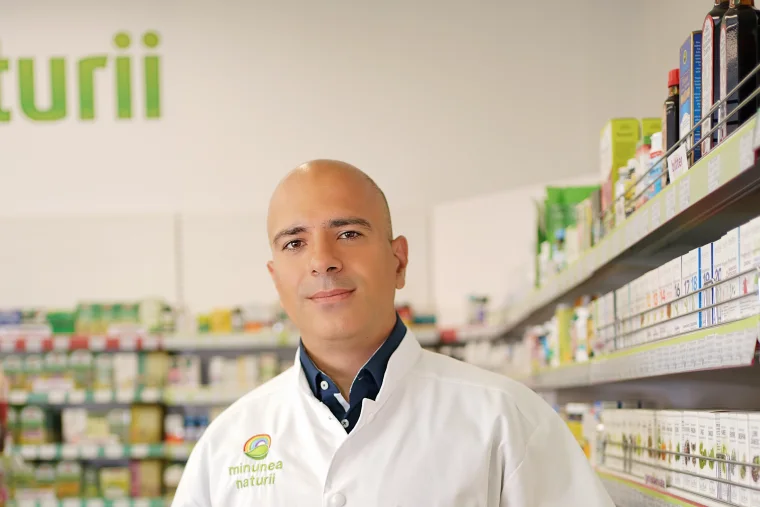 Checked by Adrian Ienin, pharmacist · updated
Low vitamin D means the 25-OH vitamin D value in your blood test is below the range your lab uses. Below 12 ng/mL (30 nmol/L) is deficiency. Between 12 and 20 ng/mL may be too little for some people. Many labs print 30–100 ng/mL as the desired range. In autumn and winter, levels drop in almost everyone, because the skin makes less vitamin D.
Want to see what this means for you? Start for free →
What does the vitamin D test measure?
The test is called 25-OH vitamin D (25-hydroxyvitamin D). It measures the form of vitamin D circulating in your blood and shows how much you have received in recent weeks: from the sun, from food and from supplements, if you take any.
Vitamin D helps the body use calcium and phosphorus, so it matters for bones and muscles. Most of it is made in the skin, in direct sunlight. Less comes from food: oily fish (salmon, mackerel, sardines), eggs and fortified foods.
The result comes in ng/mL or nmol/L, depending on the lab. To convert, multiply ng/mL by 2.5. For example, 20 ng/mL is 50 nmol/L.
What counts as low vitamin D, in numbers?
There is no single threshold, and that confuses many people. The US National Institutes of Health (NIH) use the thresholds below for adults. Many labs, however, use a higher desired range of 30–100 ng/mL.
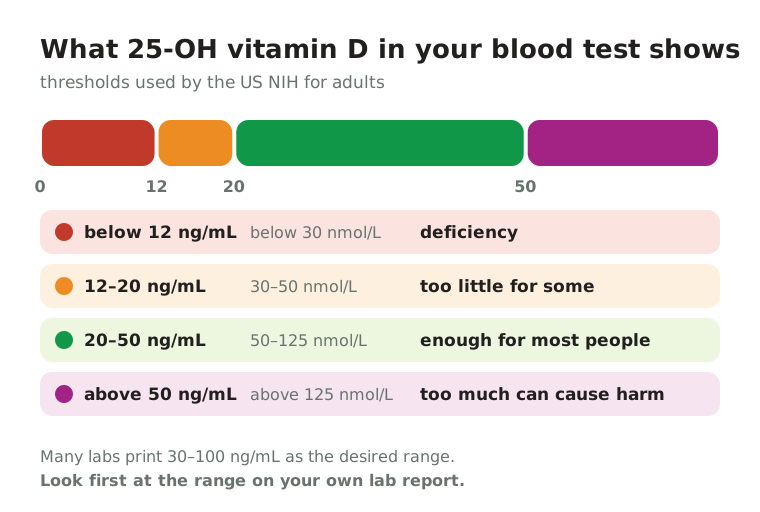
So the same value, say 24 ng/mL, can be “enough” by NIH standards and “below range” on your report. That is not a mistake. They are two ways of reading the same number. What matters for you is your lab's range and what your doctor says after seeing the rest of your results.
Why does vitamin D drop in autumn and winter?
In much of Europe, from October to March the sun is too low for the skin to make vitamin D. The UK's National Health Service (NHS) says the same: in the colder months, almost nobody can make enough vitamin D from sunlight.
Levels drop more easily if you:
- spend a lot of time indoors or work in an office;
- wear clothes that cover almost all your skin;
- have darker skin;
- are over 65 (the skin makes less vitamin D);
- carry extra weight (vitamin D is stored in fat);
- have a condition that affects absorption, such as coeliac disease or inflammatory bowel disease;
- take certain medicines, for example some anticonvulsants.
If you already have your report, upload it to your free MentorSano account. You see vitamin D next to your other results, in plain words, with the explanation checked by a pharmacist.
What symptoms can it cause?
Most often, none. Many people only find out from a blood test. When the deficiency is large and lasts, you may notice:
- bone or muscle pain;
- muscle weakness, especially when climbing stairs or getting up from a chair;
- tiredness.
These signs have many other possible causes, from too little sleep to low iron or thyroid problems. That is why vitamin D is read together with your other results and how you feel, not on its own.
What should you do if your vitamin D is low?
The steps below are general. What suits you is decided by your doctor, who sees the whole picture.
| Step | Why |
|---|---|
| Show the result to your GP | They decide whether you need a supplement, at what dose and for how long. |
| Ask about calcium, phosphorus or PTH | With a very low value, your doctor may want to see these too. |
| Get some sun in spring and summer | A few minutes a day with arms and face uncovered, without burning. |
| Eat oily fish once or twice a week | It is one of the few food sources. |
| Repeat the test when your doctor says | Usually after a few months, to see whether the value has risen. |
The NHS recommends 10 micrograms (400 IU) of vitamin D a day for adults and children over one in the colder months. The dose for a low value may be different and is set by your doctor. The Endocrine Society's 2024 guideline does not recommend routine testing in healthy adults under 75, only when there is a reason.
Can vitamin D be too high?
Yes. Above 50 ng/mL (125 nmol/L), the NIH says unwanted effects can appear. Very high values almost always come from high-dose supplements taken for a long time without monitoring. Sunlight does not cause excess. That is why a high dose is not taken “just in case”, and the test is repeated when your doctor asks for it.
Which foods contain vitamin D?
Only a little vitamin D comes from food, but some foods help more than others:
- oily fish: salmon, mackerel, herring, sardines, trout;
- egg yolks;
- liver;
- mushrooms exposed to UV light (it says so on the pack);
- foods fortified with vitamin D: some milks, yoghurts, cereals or plant drinks.
Even with a good diet, in winter it is hard to get what you need from food alone. That is why, in the colder months, your doctor may recommend a supplement, especially for people in the higher-risk groups.
When to see a doctor
- Your value is below 12 ng/mL (30 nmol/L) or far above your lab's range.
- You have bone pain, muscle weakness or fractures after minor falls.
- You have kidney, liver or bowel disease, or take medicines that can affect vitamin D.
- You are pregnant, breastfeeding or want to give vitamin D to a child.
- You want to take vitamin D in high doses.
Frequently asked questions
What is a normal vitamin D level?
It depends on the lab. The NIH considers 20 ng/mL (50 nmol/L) enough for most adults. Many labs print 30–100 ng/mL as the desired range. Look first at the range on your own report.
How do I convert ng/mL to nmol/L?
Multiply by 2.5. For example, 20 ng/mL = 50 nmol/L, and 30 ng/mL = 75 nmol/L.
Should I test my vitamin D every year?
Not necessarily. The Endocrine Society's 2024 guideline does not recommend routine testing in healthy adults under 75. The test is done when there is a reason: symptoms, a condition that affects absorption or a treatment your doctor wants to follow.
Can I make enough vitamin D from the sun in winter?
In much of Europe, from October to March, usually not. The sun is too low. In spring and summer, a few minutes a day with arms and face uncovered helps, without burning.
Do sunbeds help with vitamin D?
They are not a recommended option. Sunbed light raises the risk of skin cancer, and many sunbeds do not give the type of light that makes vitamin D. For a low value, talk to your doctor.
Start from where you are today
MentorSano brings together your blood tests, sleep, meals, movement and habits, and Adrian Ienin checks your plan before it reaches you.
- 15-minute questionnaire
- Blood tests, explained
- Daily journal
- Lesson of the day
- An expert by your side
Adrian Ienin
Naturopathic pharmacist, nutrition and holistic health consultant, co-founder of MentorSano. He checks the articles here and the plans in the platform before they reach people.