How metabolism works and what you can actually change
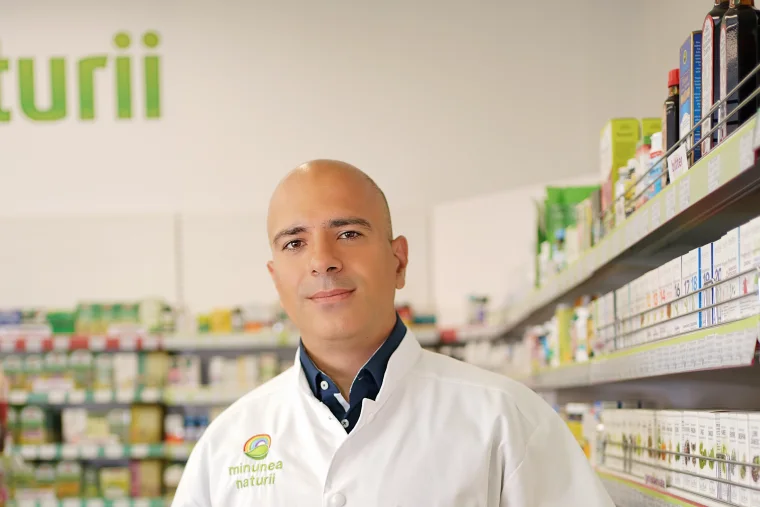 Checked by Adrian Ienin, pharmacist · updated
To understand how metabolism works, think about the energy your body uses in a day: most of it goes on basic functions (heart, brain, breathing), some on digestion and the rest on movement. A large study published in Science in 2021 showed that metabolism stays almost the same between 20 and 60 and only declines after that. The things you can change most are how much you move and how much muscle you keep.
Want to see what this means for you? Start for free →
What is metabolism?
Metabolism is all the processes your body uses to turn food into energy and into the material it rebuilds itself from. When people say they have a “slow” or “fast” metabolism, they usually mean how much energy (how many calories) their body uses in a day.
That energy goes three main ways:
- Basic functions, meaning what you use at rest: your heart beats, your brain works, you breathe, you keep your temperature steady. For most people, this is the largest share.
- Digestion: digesting and using food also takes energy. Protein takes more than fat or carbohydrates.
- Movement: from sport to walking around the house, climbing stairs or small movements during the day. This is the part that varies most from person to person.
Does metabolism slow down after 30 or 40?
Many people blame extra kilos on a metabolism that “slows down” after 30 or 40. A study published in 2021 in Science analysed energy use in over 6,000 people, from newborns to 95-year-olds, using a very precise method. The result surprised many:
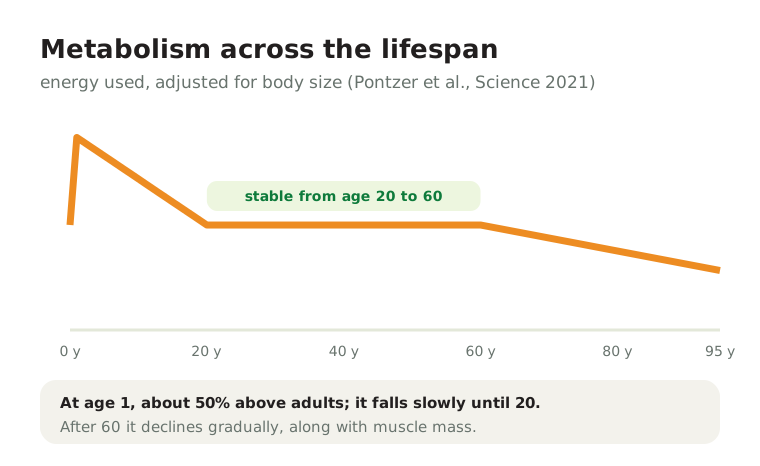
- in one-year-olds, metabolism relative to body size is about 50% higher than in adults;
- it falls slowly until around 20;
- it stays practically stable between 20 and 60, even during pregnancy;
- it only declines after 60.
That means the kilos gained between 30 and 50 usually come from something else: less movement, more food, less sleep, stress, changes in routine. And those are things you can change.
Why do some people burn more energy than others?
Bigger bodies use more energy, because they have more cells to maintain. Muscle mass matters most: muscle uses energy even at rest, more than fat tissue does.
Other factors:
- how much you move during the day, not just during exercise: walking, standing, housework;
- genetics, to a lesser extent than people think;
- some conditions, such as a thyroid that works too slowly or too fast;
- some medicines, which can change appetite or weight.
If you want to see how your movement, sleep and meals connect, your free MentorSano account keeps your daily journal, and the daily lesson briefly explains topics like this one, tied to what you're working on.
How can you influence your metabolism?
| What you do | What happens |
|---|---|
| Strength exercises twice a week | you keep and build muscle, which uses energy even at rest |
| More movement during the day | it's the part of energy use you can increase most easily |
| Protein at every meal | it fills you up better and helps you keep muscle |
| Enough sleep | short sleep increases hunger and cravings for calorie-dense food |
| No very strict diets | when food drops suddenly, the body loses muscle too and adapts by using less energy |
What doesn't work?
Many products promise to “boost your metabolism”: teas, pills, “fat-burning” foods. Their effect, where there is one, is very small compared with daily movement or keeping your muscle. Coffee and green tea slightly raise energy use for a while, but not enough to change your weight without other changes.
Likewise, eating many times a day to “keep your metabolism going” has no solid evidence behind it. What and how much you eat in total matters more than how often.
Why is it useful to understand metabolism?
When you know where your energy goes, you can choose better where to put your effort. Instead of looking for a miracle product, you can focus on the things that show results over time: moving more during the day, keeping your muscle, sleeping enough and eating meals that fill you up. They're ordinary things, but research shows they're what lasting change rests on.
When to see a doctor
- You've gained or lost a lot of weight in a short time without changing what you eat or how much you move.
- You have severe tiredness, feel cold, have dry skin and constipation: it could be your thyroid.
- You have palpitations, tremor, sweating and are losing weight for no reason.
- You've started a new medicine and noticed big changes in your weight.
Frequently asked questions
Do I have a slow metabolism?
Few people really have a much slower metabolism than others of the same size and age. Differences more often come from how much you move and how much muscle you have. If you suspect a problem, such as with your thyroid, your doctor can order tests.
How can I speed up my metabolism?
Strength exercises that keep your muscle, and more movement during the day, help most. Enough sleep and meals with protein help too. “Metabolism-boosting” pills and teas have a very small effect.
Why am I gaining weight after 40 even though I eat the same?
The Science study shows that metabolism doesn't drop much at this age. Usually movement decreases, a little muscle is lost, and sleep and routine change. Even if you eat the same, you use less.
Do very strict diets damage your metabolism?
A sudden drop in food can make the body lose muscle too and use less energy. That's why moderate changes, with protein and movement, hold up better in the long run.
Does eating in the evening slow your metabolism?
There's no evidence that meal timing alone changes your metabolism. What you eat across the whole day matters more. A big, late dinner can spoil your sleep, though, and poor sleep increases hunger the next day.
Do men have a faster metabolism than women?
Men use more energy on average, mainly because they have bigger bodies and more muscle. Relative to lean body mass, the differences are much smaller.
Start from where you are today
MentorSano brings together your blood tests, sleep, meals, movement and habits, and Adrian Ienin checks your plan before it reaches you.
- 15-minute questionnaire
- Blood tests, explained
- Daily journal
- Lesson of the day
- An expert by your side
Adrian Ienin
Naturopathic pharmacist, nutrition and holistic health consultant, co-founder of MentorSano. He checks the articles here and the plans in the platform before they reach people.