How much water to drink a day: what you need and how to tell
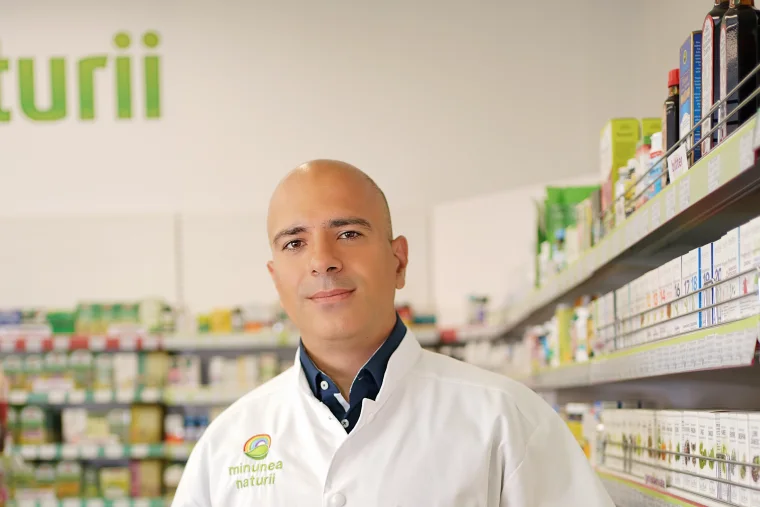 Checked by Adrian Ienin, pharmacist · updated
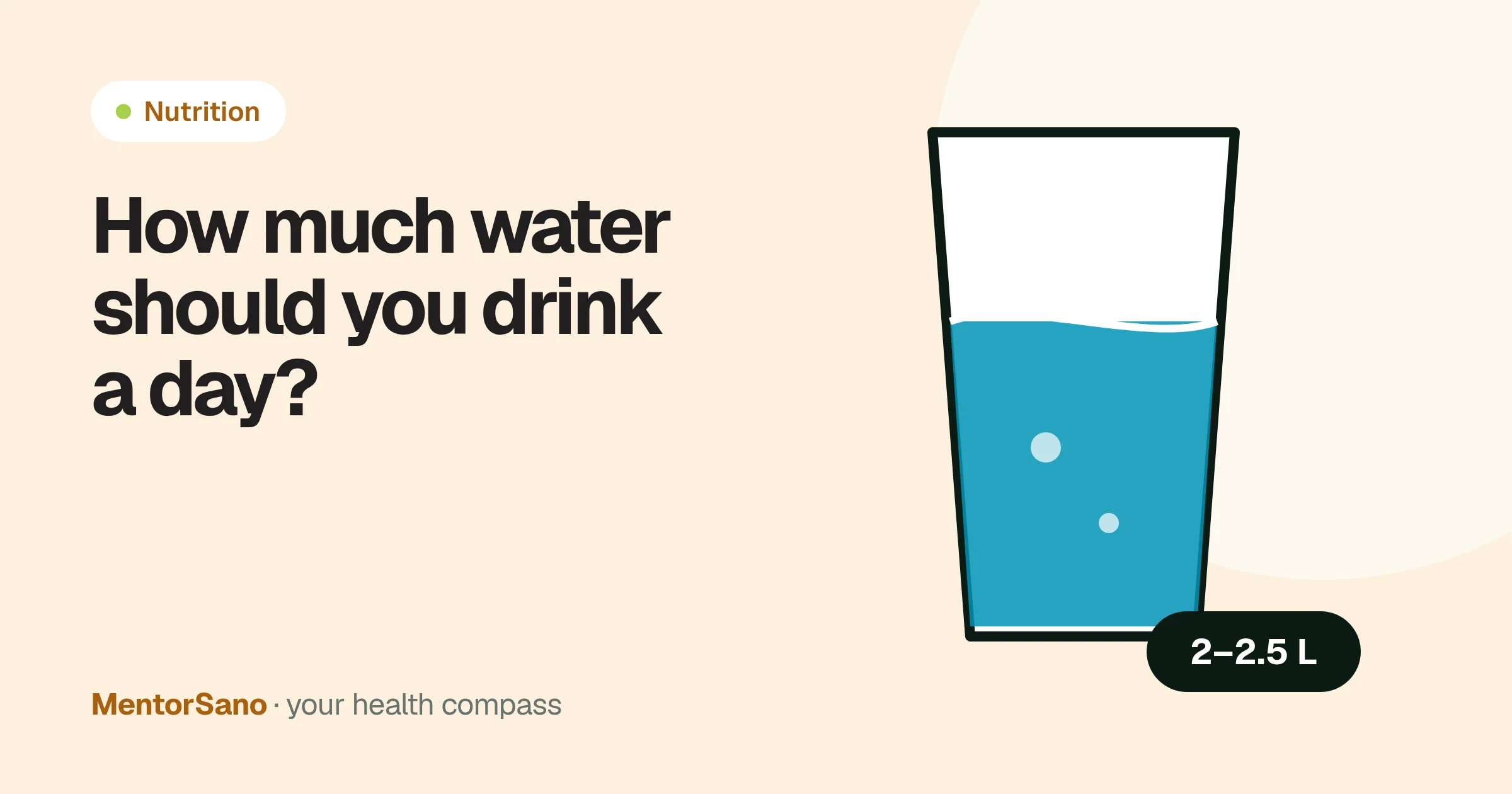
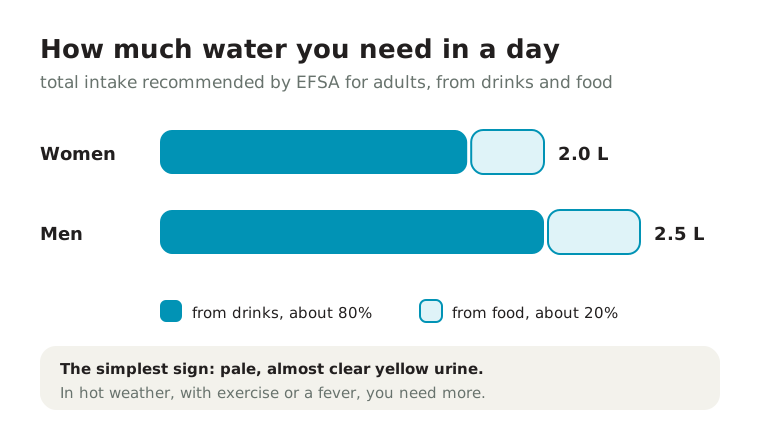
The European Food Safety Authority (EFSA) recommends a total water intake of 2 litres a day for adult women and 2.5 litres for men. About a fifth comes from food, the rest from drinks. If you're wondering how much water to drink, the simplest sign is your urine: pale, almost clear yellow means you're drinking enough. In hot weather, when you exercise or have a fever, you need more.
Want to see what this means for you? Start for free →
How much water do experts recommend?
In 2010, EFSA looked at how much fluid healthy people take in and lose, and set an adequate intake for adults: 2 litres a day for women and 2.5 litres for men. The figure covers all water, not just what's in your glass. About 20% comes from food, mostly from vegetables, fruit, soups and dairy.
The UK's National Health Service (NHS) gives a simpler guide: 6 to 8 cups or glasses of fluid a day. The two recommendations say roughly the same thing, counted differently.
These figures are averages. A 50-kilo person sitting at a desk needs less than a 90-kilo person working outdoors in summer.
What counts?
- Water, still or sparkling: the simplest choice.
- Tea and coffee count too. Coffee in normal amounts doesn't dehydrate you, even if it sends you to the bathroom more often.
- Milk and unsweetened plant drinks.
- Soups, vegetables and fruit: cucumber, watermelon, tomatoes and citrus fruit are almost all water.
- Juices and sugary drinks hydrate you, but bring a lot of sugar. The NHS suggests no more than one small glass of fruit juice a day.
- Alcohol doesn't count: it makes you lose water.
How can you tell whether you drink enough?
You don't need to count glasses. The NHS says the best sign is the colour of your urine: pale, almost clear yellow means you're drinking enough. Dark yellow with a strong smell means you need more fluid.
Thirst is a signal too, but it comes a little late. In older people the sense of thirst fades, so they can become dehydrated without feeling thirsty.
If you want to see how water ties in with your energy and sleep, the daily journal in your free MentorSano account asks how many glasses you drank and shows you, week by week, what changes.
What are the signs of dehydration?
- thirst and a dry mouth;
- little urine, dark in colour;
- tiredness and headaches;
- dizziness, especially when you stand up quickly;
- trouble concentrating.
Young children and older people get dehydrated faster, especially with diarrhoea, vomiting or a fever.
When do you need more?
| Situation | What to do |
|---|---|
| Summer, very hot weather | drink often, a little at a time, even without feeling thirsty |
| Sport or physical work | drink before, during and after; for long sessions, something with salts too |
| Fever, diarrhoea, vomiting | small, frequent sips; for children, rehydration solutions from the pharmacy |
| Pregnancy and breastfeeding | EFSA recommends 300 ml more in pregnancy and 600–700 ml more when breastfeeding |
| Long flights, air conditioning | a glass of water every few hours |
Can you drink too much water?
Yes, but it's rare in healthy people. The problem arises when someone drinks a very large amount in a short time, for example several litres within a few hours during long exercise, without any salts. Blood sodium drops, and nausea, headaches and confusion can follow. In everyday life, the kidneys of a healthy person easily get rid of any extra you drink.
If you have heart, kidney or liver disease, your doctor may tell you to drink less than the general recommendations. In that case, follow your doctor's advice.
How do you get used to drinking more water?
- Keep a water bottle in sight: on your desk, in your bag, by your bed.
- Tie a glass of water to moments you already have: when you wake up, at every meal, after coffee.
- If you don't like plain water, add slices of lemon or cucumber or a few mint leaves.
- Drink unsweetened tea, hot in winter and iced in summer.
- Eat more vegetables and fruit: they bring both water and fibre.
Water and older people: why take extra care?
With age, the sense of thirst fades, and the kidneys hold on to water less well. Some older people drink less on purpose, so they don't have to go to the bathroom as often, especially at night or when they're out. That can lead to dehydration without thirst, with tiredness, dizziness or confusion.
If you look after an older parent, it helps to leave a glass of water where they can see it, offer drinks at set times and put soups, teas and watery fruit on the table.
When to see a doctor
- You are very thirsty all the time and pee often, even though you drink a lot.
- You have signs of dehydration that don't go away: dizziness, confusion, very little urine.
- A young child or an older person has diarrhoea or vomiting and can't keep fluids down.
- You have heart, kidney or liver disease and aren't sure how much water you're allowed.
- You have swelling in your legs or face.
Frequently asked questions
How many litres of water should a woman drink a day?
EFSA recommends a total intake of 2 litres a day for women, about 1.6 litres from drinks and the rest from food. In hot weather, with exercise, in pregnancy or when breastfeeding, more is needed.
Does coffee count?
Yes. Coffee in normal amounts hydrates you almost as well as water. Just don't drink it late in the evening, so it doesn't spoil your sleep.
Is it OK to drink water with meals?
Yes, for most people it's no problem at all. Water with a meal may even help you eat more slowly.
Does water help with weight loss?
Indirectly. Water instead of sugary drinks cuts a lot of calories. Thirst is sometimes mistaken for hunger, so a glass of water before a snack helps you see whether you're really hungry.
Is mineral water as good as still water?
Yes, for hydration they're the same. Some mineral waters are higher in sodium, so if you have high blood pressure check the label and choose one that's low in sodium.
Start from where you are today
MentorSano brings together your blood tests, sleep, meals, movement and habits, and Adrian Ienin checks your plan before it reaches you.
- 15-minute questionnaire
- Blood tests, explained
- Daily journal
- Lesson of the day
- An expert by your side
Adrian Ienin
Naturopathic pharmacist, nutrition and holistic health consultant, co-founder of MentorSano. He checks the articles here and the plans in the platform before they reach people.