HbA1c (glycated haemoglobin): what your result shows and what comes next
 Checked by Adrian Ienin, pharmacist · updated
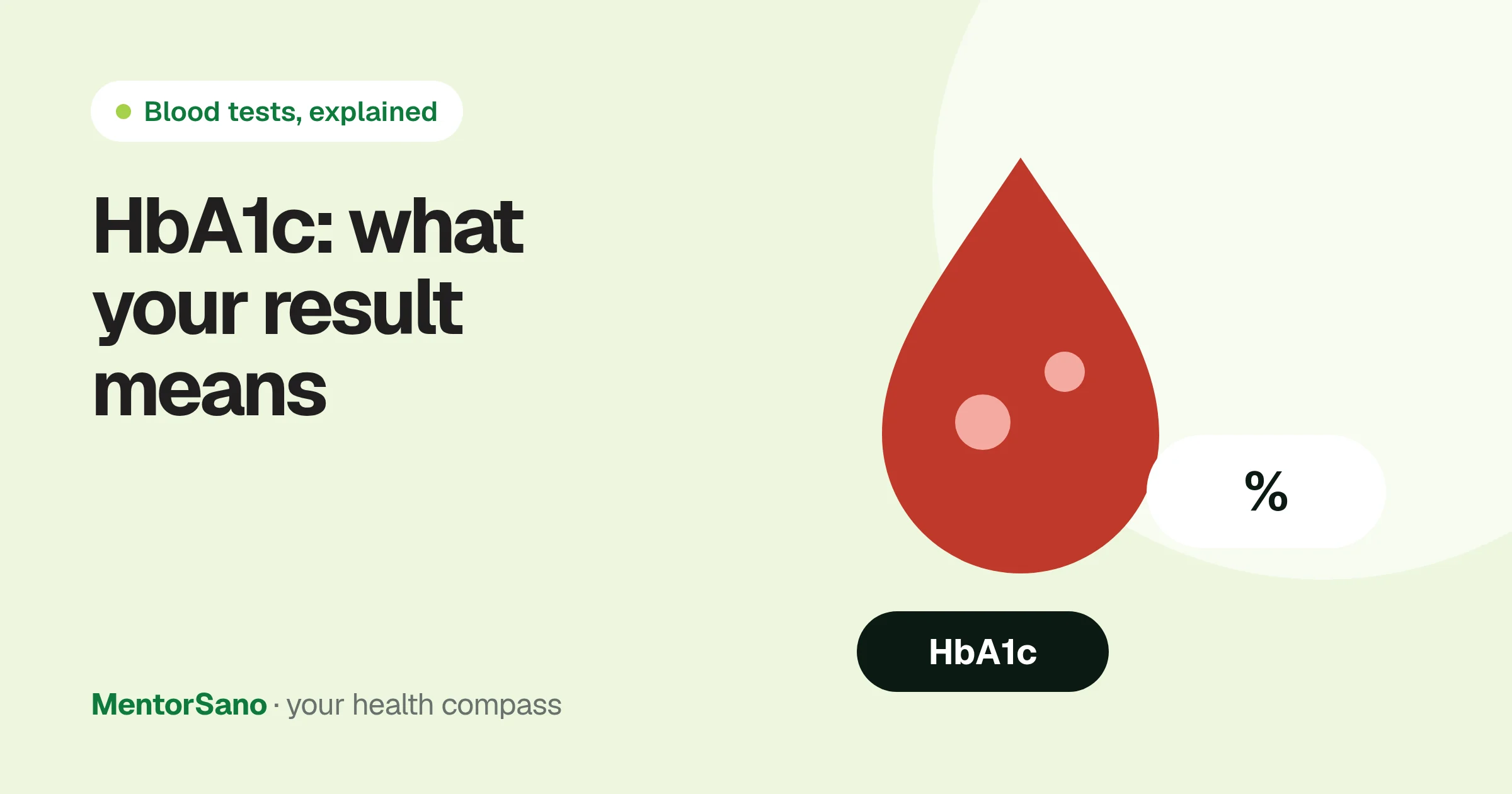
HbA1c (glycated haemoglobin) shows how much sugar your blood has carried, on average, over the past two to three months. Below 5.7% is in the normal range. Between 5.7% and 6.4%, doctors talk about prediabetes: a higher risk of diabetes that can often be turned around with changes in habits. From 6.5% upwards it may be diabetes, if a second test confirms it. The value is read together with blood glucose and your other results.
Want to see what this means for you? Start for free →
What does HbA1c measure?
Haemoglobin is the protein in red blood cells that carries oxygen. When sugar (glucose) circulates in the blood, some of it sticks to haemoglobin and stays there for as long as the red blood cell lives, about three months. The test measures what percentage of your haemoglobin has sugar attached to it.
That is its advantage. A morning blood sugar test shows the sugar in your blood at a single moment, and the value can shift after a late dinner or a bad night. HbA1c shows the average over several weeks, so one day doesn't throw it off.
You don't need to fast for HbA1c, but many labs take the sample in the morning, together with other tests that do require fasting.
What does your HbA1c value mean, by range?
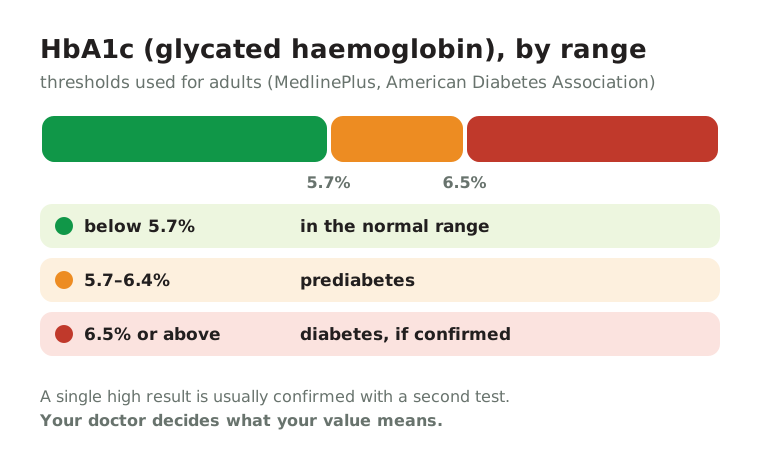
The thresholds above are the ones used by MedlinePlus and the American Diabetes Association. Some labs also report the result in mmol/mol. As a guide, 5.7% is about 39 mmol/mol and 6.5% is 48 mmol/mol.
A single result of 6.5% or more doesn't make a diagnosis on its own. Your doctor will usually ask for a second test, either another HbA1c or a fasting glucose or glucose tolerance test.
What is prediabetes?
Prediabetes means your blood sugar is higher than normal, but not yet high enough to be diabetes. Many people with prediabetes have no symptoms and find out from tests done for something else.
It's a useful warning, because this is the stage where changing your habits has the biggest effect. The UK's National Health Service (NHS) says that moving more, keeping a healthy weight and eating less sugar and more fibre can delay or even prevent type 2 diabetes.
If you already have your report, upload it to your free MentorSano account. You see HbA1c next to glucose, cholesterol and your other results, with the explanation checked by a pharmacist.
What can make the result higher or lower than it really is?
Because the test depends on red blood cells, anything that changes their lifespan can change the result:
- iron-deficiency anaemia can give somewhat higher values;
- recent blood loss, a transfusion or pregnancy can give lower values;
- some inherited haemoglobin variants can interfere with certain lab methods;
- kidney or liver disease can also affect the value.
In these situations your doctor relies more on blood glucose or asks for other tests.
What symptoms can high blood sugar cause?
Most of the time, at first, none. When blood sugar rises a lot, you may notice:
- strong thirst and a dry mouth;
- needing to pee often, especially at night;
- tiredness;
- blurred vision;
- cuts that are slow to close or infections that keep coming back;
- losing weight without trying.
If you have these signs, don't wait for a routine check-up. See a doctor.
What can you do if your HbA1c is borderline?
| What you change | Why it helps |
|---|---|
| More movement, especially after meals | muscles use glucose from the blood; a 10–15 minute walk after a meal helps |
| Fewer sugary drinks and juices | liquid sugar raises blood sugar quickly and doesn't fill you up |
| Whole grains instead of white bread | fibre slows the rise in blood sugar |
| Vegetables at every meal | they fill your plate with fewer calories and more fibre |
| Enough sleep | short sleep makes the body less sensitive to insulin |
| A few kilos less, if you carry extra weight | even a small weight loss improves blood sugar |
You don't have to change everything at once. Pick two things from the table that you can keep up, and repeat the test when your doctor says, usually after three months. HbA1c needs time to show a change, because it reflects the past few months.
How often is the test repeated?
If your value is normal and you have no risk factors, your doctor may ask for it every few years. With prediabetes, usually once a year or more often. With diabetes, the test is done several times a year to see how treatment is going. Your doctor sets the schedule based on your situation.
When to see a doctor
- Your HbA1c is 6.5% or higher, even just once.
- Your value is between 5.7% and 6.4% and you're not sure what to do next.
- You are very thirsty, pee often, have lost weight for no reason or have blurred vision.
- You are pregnant and your blood sugar or HbA1c is outside the range.
- You already have diabetes and your values aren't coming down with treatment.
Frequently asked questions
What is a normal HbA1c level?
For adults, below 5.7%. Between 5.7% and 6.4% is prediabetes, and from 6.5% upwards it may be diabetes, if a second test confirms it. Check the range on your own report too.
Do I need to fast for an HbA1c test?
Not for HbA1c itself. If you're having blood glucose or cholesterol tested on the same day, the lab will ask you to come in fasting.
How quickly does HbA1c go down?
You see the change after about three months, because the test shows the average over the past two to three months. That's why there's no point repeating it after two weeks.
Does prediabetes always turn into diabetes?
No. Many people with prediabetes never develop diabetes, especially if they move more, eat less sugar and keep a healthy weight. The risk is, however, higher than in people with normal values.
What's the difference between blood glucose and HbA1c?
Blood glucose shows the sugar in your blood at the moment the sample is taken. HbA1c shows the average over the past few months. That's why doctors use both.
What HbA1c target is used in diabetes?
Your doctor sets the target for each person, depending on age, other conditions and the risk of blood sugar going too low. For many adults with diabetes the target is around 7%, but it can be lower or higher.
Start from where you are today
MentorSano brings together your blood tests, sleep, meals, movement and habits, and Adrian Ienin checks your plan before it reaches you.
- 15-minute questionnaire
- Blood tests, explained
- Daily journal
- Lesson of the day
- An expert by your side
Adrian Ienin
Naturopathic pharmacist, nutrition and holistic health consultant, co-founder of MentorSano. He checks the articles here and the plans in the platform before they reach people.