Why diets fail after a few weeks and what works instead
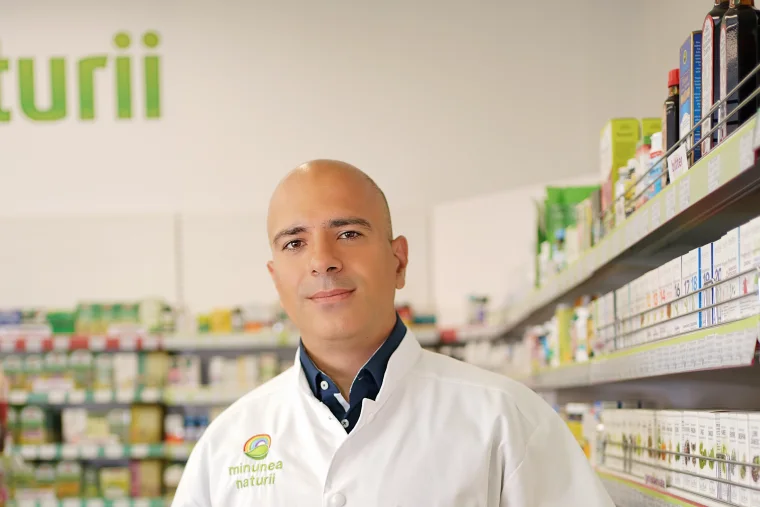 Checked by Adrian Ienin, pharmacist · updated
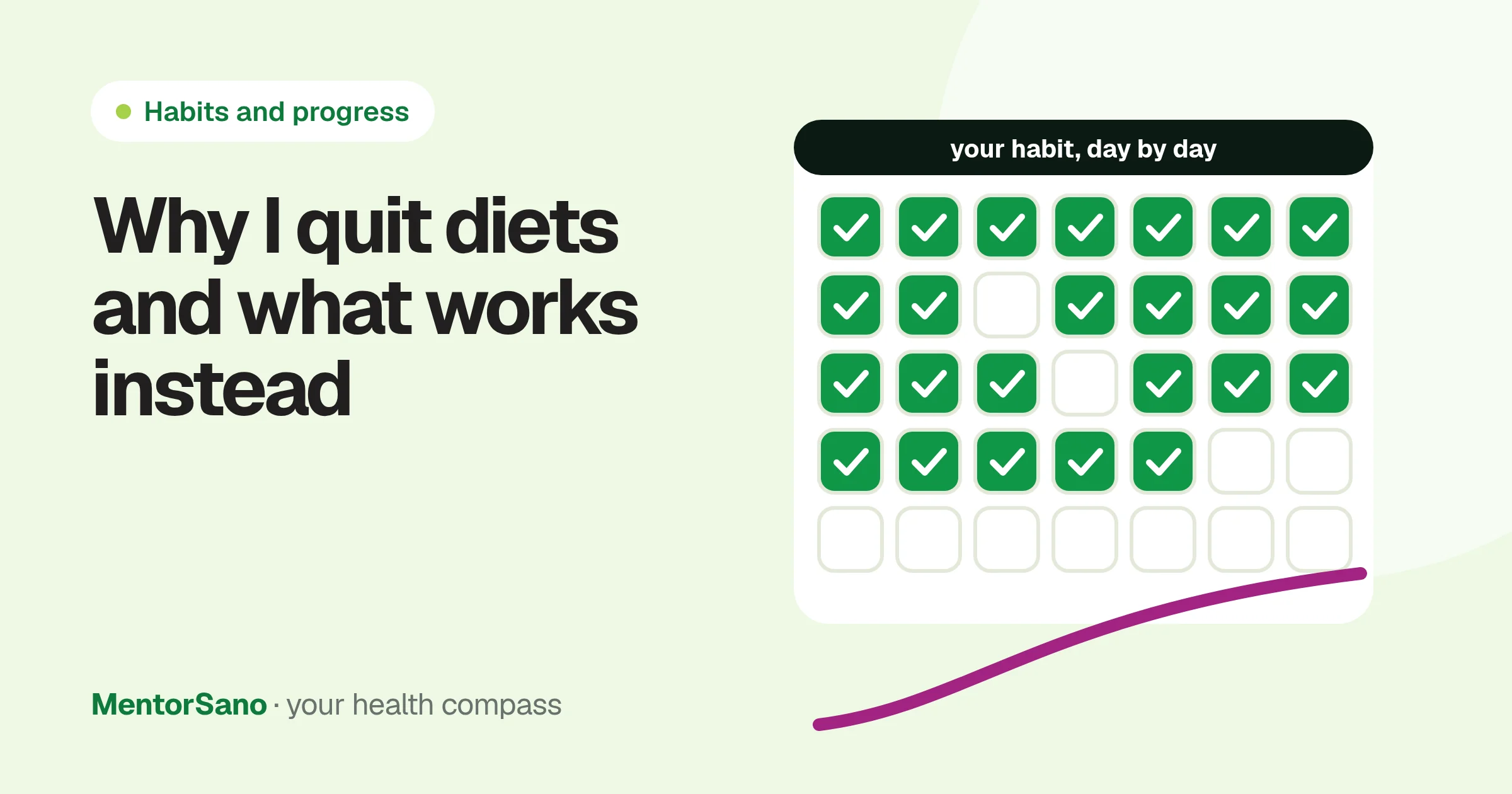
Why diets fail after a few weeks has little to do with willpower. Strict diets ask for too many changes at once, ban foods you love and leave you hungry, so they can only be kept for a while. For a healthy weight, the NHS recommends small changes you can keep for life. One step a week, instead of ten rules from day one, works better in the long run.
Want to see what this means for you? Start for free →
Why do diets fail after a few weeks?
Almost everyone who has tried to lose weight knows the feeling: the first two weeks go well, the scales go down, then there's a birthday, a hard week at work or simply hunger. The diet breaks, and the weight comes back, sometimes with a few extra kilos.
The reasons are usually the same:
- Too many changes at once. No sugar, no bread, no dinner, the gym five times a week. Each is hard; all of them together can't be kept up.
- Bans. When a food becomes "forbidden", you want it even more. The first exception often turns into eating a lot.
- Hunger. Very low-calorie diets leave you hungry and tired, and your body asks for food.
- All or nothing. One "failed" day feels like total failure, so you give up.
- The diet is temporary. When it ends, you go back to what you ate before, and so to your weight before.
What is yo-yo dieting?
Yo-yo dieting means you lose weight, put it back on, then try again. With a sudden restriction, the body loses not only fat but also some muscle, and hunger rises. When the diet ends, the weight comes back more easily. It isn't a flaw in you; it's how the body responds to a sudden shortage of food.
What works instead?
Studies on habits and NHS advice say much the same thing: small changes, one at a time, that you can keep.
| Instead of | Try |
|---|---|
| "From tomorrow, no more sweets" | dessert only at weekends, a small portion |
| "No more eating in the evening" | dinner by 7–8 pm, with vegetables and protein |
| "Only salads" | half the plate vegetables, at every meal |
| "Zero bread" | wholemeal bread, one or two slices |
| "Gym every day" | 10–20 minutes of walking a day, then more |
| "Lose 10 kg in two months" | one new habit every two or three weeks |
Each change looks small. Added together over a few months, they change a lot. And, above all, they last.
How can you tell a change is small enough?
Ask yourself: could I do this on a bad day, tired, with a full schedule? If the answer is no, it's too big. Cut it in half. A habit you do almost every day beats a perfect one you do twice and then drop.
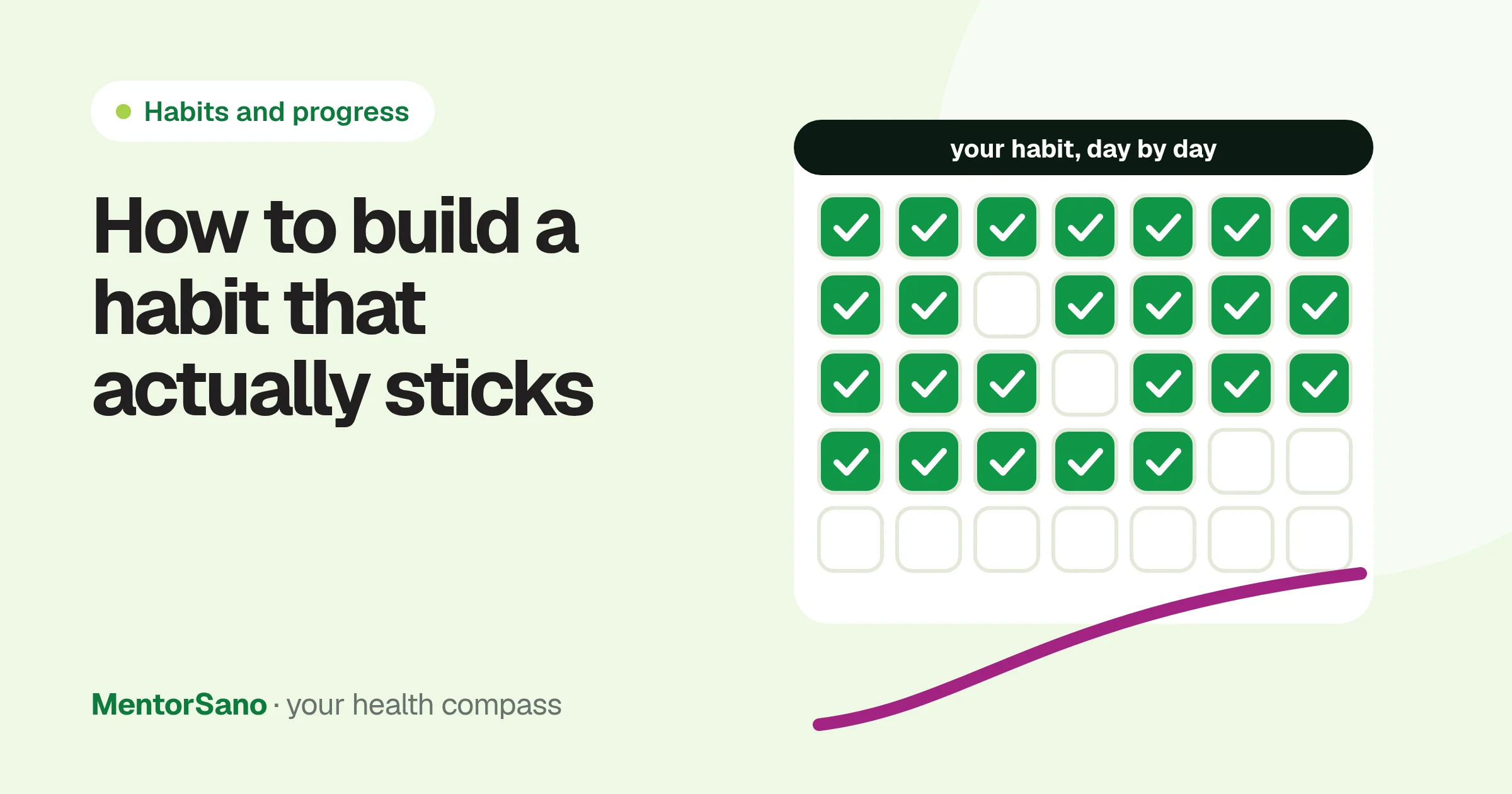
Keep a short journal, too. When you see the ticks adding up, it's easier not to break the streak, and a missed day no longer feels like failure.
What does the first month without a diet look like?
An example, for someone who wants to lose weight and has already tried several diets:
- Week 1: water instead of juice or sugary drinks. Nothing else changes.
- Week 2: vegetables at lunch and dinner, about half the plate.
- Week 3: dinner by 8 pm and a short walk after it.
- Week 4: breakfast with protein: eggs, yoghurt or cheese, instead of pastries.
After a month, the scales may show 1–3 kg less. That seems little next to what diets promise. The difference is that you haven't given up anything you love and you don't feel hungry. And these habits are still there in the second month, when a strict diet would already have been dropped.
How does MentorSano help instead of another diet?
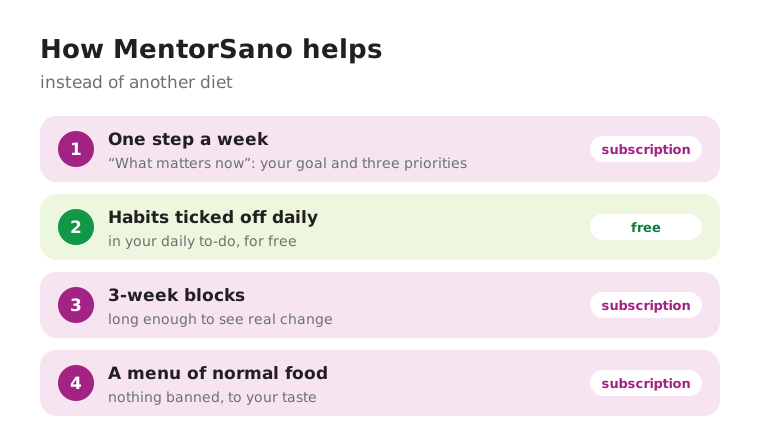
MentorSano isn't a diet and doesn't give you lists of banned foods. It's built on small habits, followed day by day:
- For free, in your daily to-do you tick off the habits that matter: water in the morning, dinner by 7 pm, going to bed on time and others.
- With the subscription you get "What matters now": your goal, three priorities and one important step a week, four weeks in a row.
- 3-week blocks: long enough to see real change. At the end you have a review and start the next round with an adjusted plan.
- The weekly menu is made of normal, tasty food, to your taste, with no starving and no miracle promises.
Start with the free habits: create your free MentorSano account, and the questionnaire will show you where to start.
How fast should you lose weight?
For people with weight to lose, the NHS usually recommends 0.5–1 kg a week. That pace is easier to keep, and you lose less muscle. On the scales it looks slow, but over a few months it adds up, and weight lost this way more often stays off.
When to see a doctor
- You have a long-term condition, such as diabetes, heart or kidney disease, and want to change your diet a lot.
- You've lost or gained a lot of weight without changing anything.
- Food makes you feel guilty, you have episodes of eating a lot and not being able to stop, or you make yourself sick.
- You take medicines that can change your weight or appetite.
Frequently asked questions
Why do I put weight back on after a diet?
Because strict diets are temporary: afterwards you go back to your old habits. With a sudden restriction you also lose some muscle and hunger rises, so the weight comes back more easily.
Can I lose weight without a diet?
Yes, through small changes, one at a time: more vegetables, fewer sugary drinks, regular meals, more movement. It takes longer, but the result lasts more often.
How fast is it healthy to lose weight?
The NHS usually recommends 0.5–1 kg a week. A faster pace is hard to keep and you lose more muscle.
Is it a good idea to count calories?
It can help some people, as long as it doesn't become an obsession. For many, simple habits, like the plate rule and regular meals, are enough.
What if I've eaten a lot in one day?
Nothing special. Don't skip meals the next day or try to make up for it. Go back to your usual habits at the next meal. One day doesn't undo what you do on most days.
Do I have to give up sweets completely?
No. A small dessert, enjoyed at the weekend, fits very well into a healthy diet. Cutting the amount and how often helps more than banning sweets altogether.
Start from where you are today
MentorSano brings together your blood tests, sleep, meals, movement and habits, and Adrian Ienin checks your plan before it reaches you.
- 15-minute questionnaire
- Blood tests, explained
- Daily journal
- Lesson of the day
- An expert by your side
Adrian Ienin
Naturopathic pharmacist, nutrition and holistic health consultant, co-founder of MentorSano. He checks the articles here and the plans in the platform before they reach people.