Normal blood tests but tired all the time: where to start
 Checked by Adrian Ienin, pharmacist · updated
Having normal blood tests but feeling tired is very common. Routine tests don't measure everything: they can't see your sleep, your stress, how you eat or how much you move, and a borderline value can matter in your situation. The first step is to put how you feel, how you sleep and what you eat next to your results. If the tiredness has lasted for weeks or comes with other signs, see your doctor.
Want to see what this means for you? Start for free →
Why can you feel tired when your blood tests are normal?
Many people end up in the same place. They feel tired, flat and sleep badly, so they get blood tests, and the report comes back "within range". Then the question stays: so what's wrong with me?
The answer is usually simple and a little frustrating: routine tests measure only part of what happens in the body. They don't see how many hours you really sleep, how much stress you carry, how much you move, how often you skip meals or how much coffee you drink in the afternoon. The NHS says most tiredness is linked to lifestyle, sleep or stress, not to an illness that shows up in a blood test.
There's one more thing: "in range" doesn't always mean "right for you". A ferritin at the low end of the range, or low vitamin D in winter, can matter, especially next to symptoms. That doesn't mean you're ill. It means the value is worth looking at in context.
What are the most common causes of tiredness?
- Sleep. Too little, at irregular times or often broken. Many people sleep less than they think.
- Stress. Worries that last for weeks spoil sleep and drain energy.
- Meals. Skipped meals, lots of sugar and little protein give energy dips during the day.
- Too little movement. It sounds odd, but people who move more usually feel more energetic.
- Late coffee. Coffee in the afternoon spoils your sleep, and the next day you need even more.
- Borderline values. Iron, vitamin D, vitamin B12 or the thyroid can matter, even when they aren't flagged in red.
Often there isn't one cause but a few that feed each other: you sleep badly, drink more coffee, then sleep even worse. The loop repeats until you break one link.
What can you do yourself, starting tomorrow?
| What you do | What you watch for |
|---|---|
| Write down your bedtime and wake-up time for a week | whether you really sleep 7–9 hours |
| Move your last coffee before 1–2 pm | whether you fall asleep more easily |
| Stop skipping breakfast or lunch | whether the afternoon energy dip goes away |
| Add 10–20 minutes of walking a day | how you feel after a week |
| Rate your energy from 1 to 5 at lunchtime | which days are better, and why |
Make one or two changes at a time, not all of them. That way you can see what actually helps.
What does a week of looking for the cause look like?
You don't need new tests to start. You need a few notes, made every day at the same time. In the evening, jot down:
- what time you went to bed and what time you woke up;
- how many coffees you had and when the last one was;
- what you ate for lunch and whether you felt a dip afterwards;
- how much you moved, even if it was just the walk to work;
- how tired you felt, from 1 to 5.
After 7–10 days, look at the days with the lowest score. Most of the time they have something in common: a short night before, a late coffee, a heavy meal or a day without going outside. That's the link to start with. If nothing repeats, take your notes to your doctor. They say more than "I've been tired for ages".
How does MentorSano help when your results are fine but you aren't?
We built MentorSano for exactly this situation: when every piece looks fine, but the whole picture doesn't.
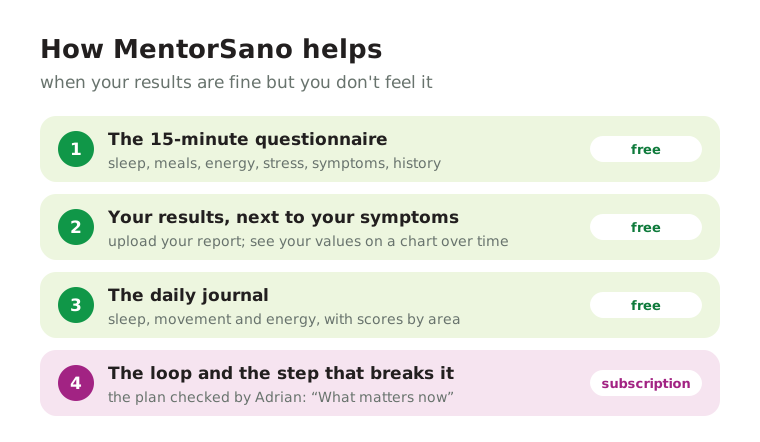
- The 15-minute questionnaire asks about sleep, meals, energy, stress, symptoms and family history. You only answer what matters for you.
- You upload your blood tests and the values appear on a chart, old next to new. You see in plain words what's worth keeping an eye on.
- The daily journal keeps track of your sleep, movement and energy, and the scores by area show where you're doing well and where you aren't.
- With the subscription, AI reads your results together with your answers and journal, and Adrian Ienin, a pharmacist, checks the plan. You get "What matters now": your goal, three priorities and one step a week.
To see how things connect for you, create your free MentorSano account. The questionnaire and the journal are free and stay that way.
Which tests are worth discussing with your doctor if the tiredness doesn't go away?
If you've been tired for several weeks, your doctor may order, depending on your case, tests that aren't always in the routine panel:
- ferritin and iron, for your iron stores;
- vitamin D and vitamin B12;
- TSH, for the thyroid;
- HbA1c and blood glucose;
- inflammation markers, such as C-reactive protein.
You don't need all of them. Your doctor chooses based on how you feel and on your history.
When to see a doctor
- The tiredness has lasted more than a few weeks and doesn't improve with sleep and rest.
- You've lost weight for no reason, or have a fever, night sweats or swollen glands.
- You look pale, feel dizzy or get breathless with little effort.
- You've felt low or hopeless for several weeks.
- You snore loudly or stop breathing for moments in your sleep.
Frequently asked questions
Why am I always tired if my blood tests are normal?
Routine tests don't measure sleep, stress, meals or movement, which are the most common causes of tiredness. Sometimes a borderline value also matters in your situation.
Which blood tests should I get for tiredness?
Your doctor chooses based on your symptoms. A full blood count, ferritin, vitamin D, vitamin B12, TSH and blood glucose are often checked. Don't get them all without talking to your doctor.
Can stress make me tired even if I sleep enough?
Yes. Stress that lasts uses up energy and lowers the quality of your sleep, even when the hours look sufficient.
How long until I feel better?
It depends on the cause. Many people notice a difference after 2–3 weeks of regular sleep, no long gaps between meals and a little movement every day.
What does a borderline value mean?
A value close to the edge of the range on your report. It doesn't mean an illness, but it's worth following over time and discussing with your doctor, especially if you have symptoms.
Can my tests be normal and something still be wrong?
Yes. Basic tests don't see everything: sleep, stress, diet and movement don't show up in them. If the tiredness lasts more than a few weeks, ask your doctor which other tests or check-ups might make sense.
Start from where you are today
MentorSano brings together your blood tests, sleep, meals, movement and habits, and Adrian Ienin checks your plan before it reaches you.
- 15-minute questionnaire
- Blood tests, explained
- Daily journal
- Lesson of the day
- An expert by your side
Adrian Ienin
Naturopathic pharmacist, nutrition and holistic health consultant, co-founder of MentorSano. He checks the articles here and the plans in the platform before they reach people.