Too much health advice: what to start with, really
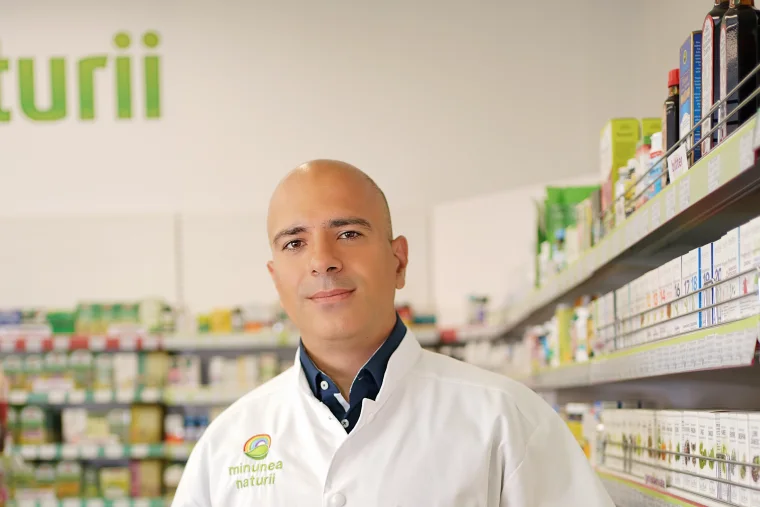 Checked by Adrian Ienin, pharmacist · updated
When you get too much health advice, from friends, the internet and adverts, you can end up doing nothing at all. It helps to start from yourself, not from the advice: what bothers you most right now, your sleep, your energy, your weight or a test result? Choose one priority, find the smallest step that helps it and keep it for three weeks. The rest of the advice can wait.
Want to see what this means for you? Start for free →
Why does too much health advice leave you stuck?
Drink more water. Try intermittent fasting. Don't eat after 6 pm. Take magnesium. Go to the gym four times a week. Sleep eight hours. Cut out gluten. Take cold showers. Each piece of advice seems reasonable on its own. All of them at once can't be done.
And some contradict each other: what you read today is healthy, tomorrow you hear is harmful. The result is decision fatigue: when you have too many options and no order among them, you end up choosing nothing. Or you start ten things and drop all of them within two weeks.
A lack of advice isn't the problem. The problem is that nobody has told you what matters most for you and where to start.
How do you choose one priority?
- Start from how you feel. What bothers you most right now: tiredness, sleep, weight, digestion, a test result out of range?
- Look for the links. Poor sleep brings more coffee, sugar cravings and less movement. Sometimes one problem keeps the others going.
- Pick the link that's easiest to change. Not the most important one in theory, but the one you can actually do this week.
- Put the rest on a "later" list. You don't forget them, you just put them off.
What does a good step look like?
| The priority | A small, fitting step |
|---|---|
| Afternoon tiredness | last coffee before 1 pm |
| Sleep | the same wake-up time, at weekends too |
| Weight | water instead of sugary drinks |
| Energy | 10 minutes of walking after lunch |
| Digestion | dinner 2–3 hours before bed |
| Borderline blood sugar | vegetables at every meal and a walk after the main meal |
A good step is small enough to do even on a bad day and close enough to your problem that you feel the difference within a few weeks.
How do you filter the advice that keeps coming?
- Who is saying it? A named professional with training, a health institution, or someone selling something?
- What is it based on? Studies, guidelines, or just "it worked for me"?
- Does it fit you? Good advice for a 25-year-old athlete may not suit you.
- What would you have to drop to do it? If it spoils the step you're working on now, wait.
What do you leave for later?
This matters as much as what you choose. For most people, a few things can wait quietly until the basics are working:
- supplements taken "just in case", without a test or a clear reason;
- branded diets with strict rules and lists of banned foods;
- gadgets and expensive tests, if you don't yet sleep and eat regularly;
- intense exercise programmes, if right now you hardly move at all;
- any advice that asks you to change five things at once.
That doesn't make them bad. It just means they aren't your step right now. You can put them on the "later" list and take them one by one once your first habit has settled.
How does MentorSano help when you've had too much health advice?
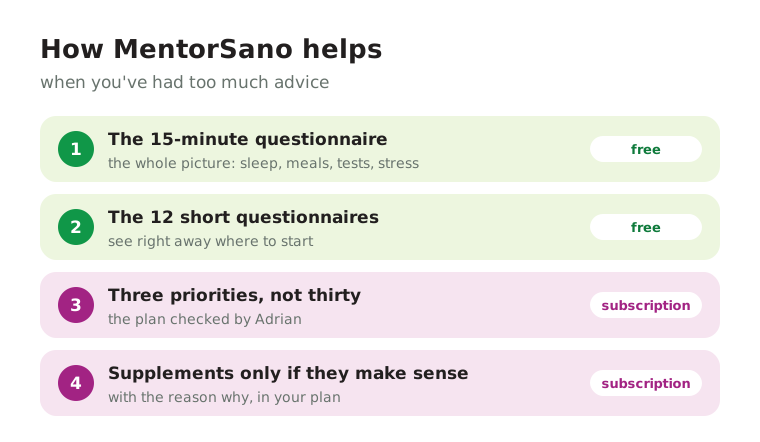
MentorSano started from people who told us they'd received long lists of supplements and rules, but nobody had told them where to begin.
- The 15-minute questionnaire gathers the whole picture: sleep, meals, energy, movement, stress, symptoms, history. If you have blood tests, you upload them and they join the same picture.
- The 12 short questionnaires, 2–3 minutes each, show you right away where to start: stress, sleep, diet, daily rhythm, screens and more.
- With the subscription, AI prepares a draft and Adrian Ienin, a pharmacist, checks it. You get "What matters now": your goal and three priorities, not thirty. Then one step a week.
- Supplements, if they make sense for you, come with the reason why. No more buying at random or because someone told you to.
Start with the free part: create your free MentorSano account and fill in the questionnaire. In 15 minutes you'll know what's worth doing first.
What do you do when two pieces of advice contradict each other?
Look at the source and the date: a recent medical guideline weighs more than an old article or a social media post. If it's still unclear, ask a professional who knows your situation. And remember that, for most people, the basics don't contradict each other: regular sleep, more vegetables, daily movement, less sugar and alcohol.
When to see a doctor
- You have new symptoms or ones that don't go away, and don't know whether they're about habits or an illness.
- You want to take supplements and already have treatment, a long-term condition or are pregnant.
- You've been advised to stop a prescribed treatment.
- Worrying about your health takes up much of your day and makes you anxious.
Frequently asked questions
Where should I start with a healthy lifestyle?
With the thing that bothers you most right now and the smallest step that could help it. For tiredness, for example: last coffee before 1 pm. Keep it for three weeks, then add the next one.
Why can't I change several things at once?
Because every change needs attention and effort, and attention is limited. One new habit every few weeks is much easier to keep than ten at once.
How do I know which advice to trust?
Look at who gives it, what it's based on, how recent it is and whether someone is selling you something. Guidelines from health institutions weigh more than personal stories.
Do I need to take supplements?
Not necessarily. Some make sense for some people, for example vitamin D in winter when your level is low. A doctor or pharmacist can help you pick only what's useful for you.
How long should I keep one step before moving on?
Usually 2–3 weeks, until you do it almost without thinking. Then add the next one, without dropping the first.
Start from where you are today
MentorSano brings together your blood tests, sleep, meals, movement and habits, and Adrian Ienin checks your plan before it reaches you.
- 15-minute questionnaire
- Blood tests, explained
- Daily journal
- Lesson of the day
- An expert by your side
Adrian Ienin
Naturopathic pharmacist, nutrition and holistic health consultant, co-founder of MentorSano. He checks the articles here and the plans in the platform before they reach people.