Healthy lunch for work, without pastries or the 3 pm slump
 Checked by Adrian Ienin, pharmacist · updated
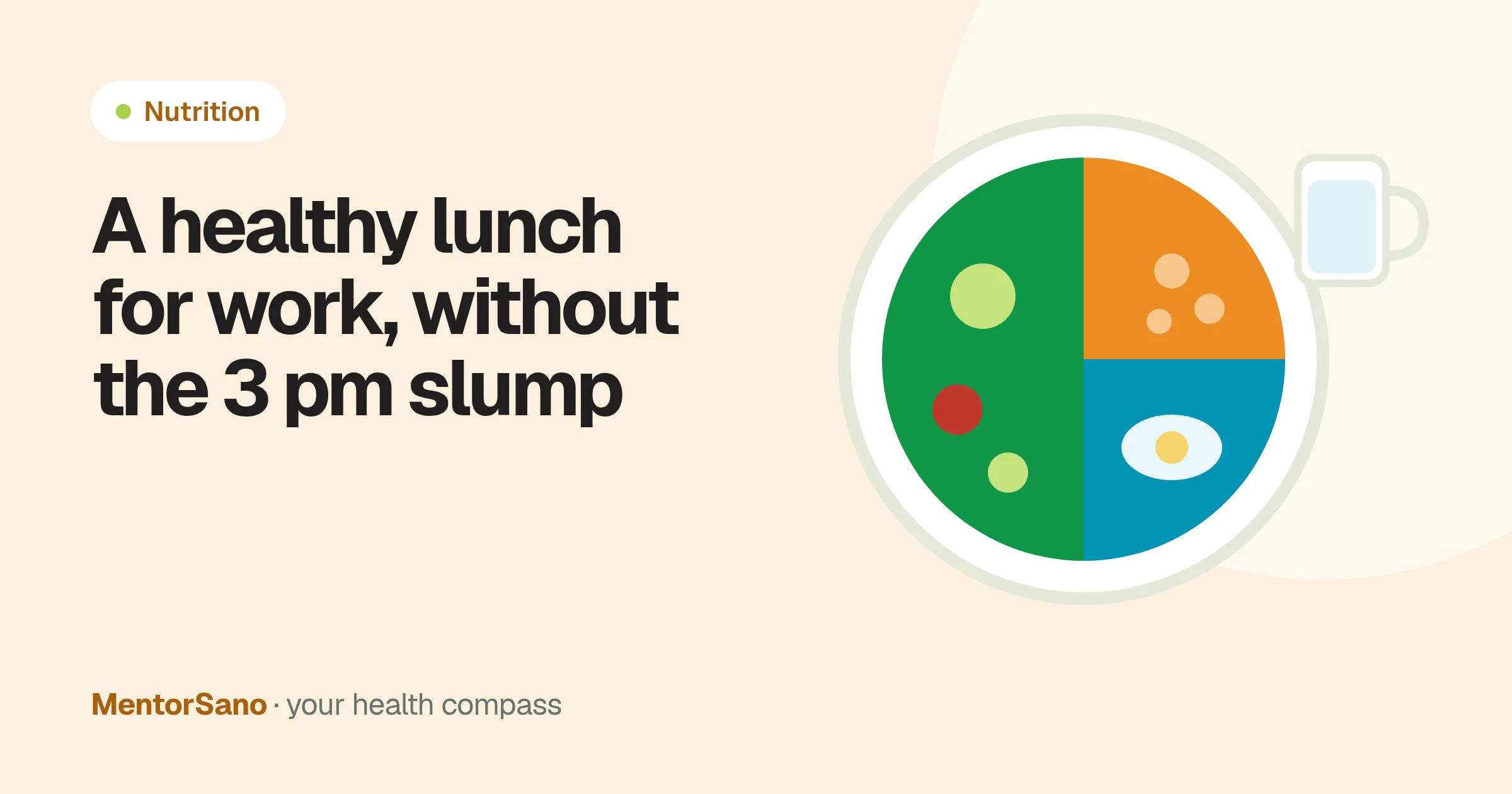
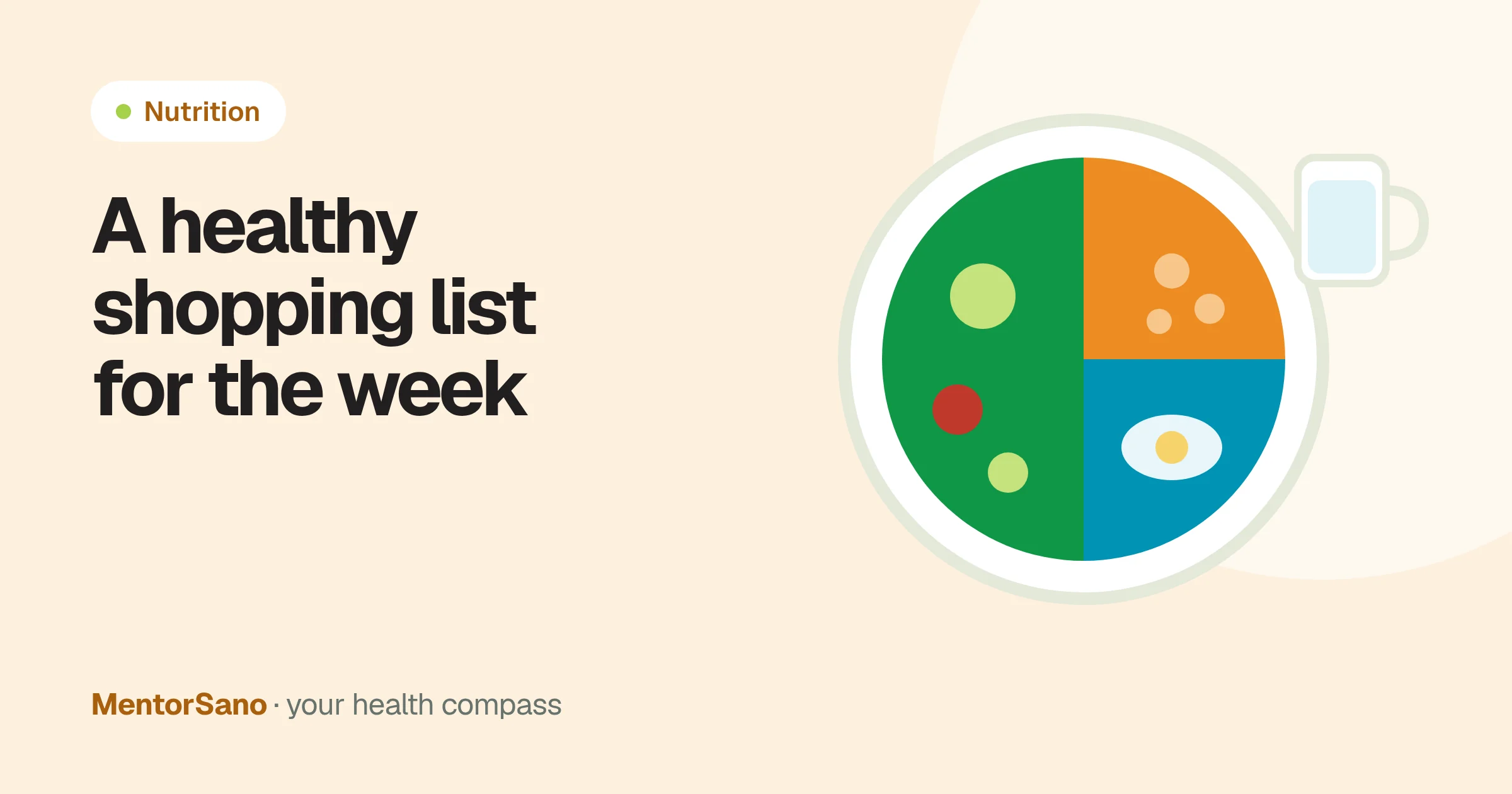
A healthy lunch for work doesn't need special recipes. Half the box is vegetables, a quarter protein and a quarter whole grains or potatoes. You make it from what you cook double at dinner, or pick it at the canteen by the same rule. The 3 pm slump is partly your body's rhythm, but a lunch full of carbohydrates, such as a pastry and a white-bread sandwich, makes it stronger.
Want to see what this means for you? Start for free →
Why do you eat whatever you can grab at work?
In the morning you leave in a rush. At 11 you're hungry and grab a pastry. At 1 you have a meeting, so lunch is a sandwich from the petrol station or the vending machine, eaten in front of your screen. Around 3 your eyelids drop, and the second coffee doesn't help much.
It isn't a lack of willpower. At work, food is a last-minute decision, made when you're very hungry and have few options to hand. At that moment, what's close and quick to eat wins: pastries, white-bread sandwiches, something sweet with your coffee. If you want a better lunch, you have to decide on it before you get hungry.
Why do you fall asleep at 3 in the afternoon?
Afternoon sleepiness has a part that has nothing to do with food. A review by the researcher Timothy Monk describes the "post-lunch dip": in the middle of the afternoon, many people feel sleepier and work more slowly. It happens even in people who've had no lunch and don't know what time it is, so it's part of your body's rhythm.
The same review says a high-carbohydrate lunch makes it worse. A pastry and a white-bread sandwich are almost all carbohydrate. Add a little natural sleepiness, a long meeting and a short night's sleep, and you get exactly the afternoon you know.
What you can control: what's in your lunch and how big it is, when you eat, your sleep at night and whether you move a little after eating.
What does a healthy lunch for work look like?
The guide is the same as at home, the "Healthy Eating Plate" from the Harvard T.H. Chan School of Public Health:
- Half: vegetables and fruit. Salad, chopped raw vegetables, roasted vegetables, a vegetable soup.
- A quarter: protein. Chicken, fish, eggs, beans, lentils, chickpeas, cheese, tofu.
- A quarter: whole grains or potatoes. Brown rice, buckwheat, wholewheat pasta, a slice of wholemeal bread.
- A little good oil and water to drink.
Protein and vegetables keep you full for longer, and the carbohydrate portion stays moderate. The World Health Organization recommends that adults eat at least 400 grams of fruit and vegetables a day. A lunch that's half vegetables covers a good part of that.
What do you pick at the shop or the canteen?
You don't have to cook every day. At the shop and the canteen you can choose better too, if you know what to look for:
| Instead of | Choose | Why |
|---|---|---|
| A pastry or a pretzel | plain yoghurt and a piece of fruit, or a handful of nuts | more protein, less white flour and salt |
| A white-bread sandwich with salami | a wholemeal sandwich with egg, chicken or tuna and salad | fibre and protein; less processed meat |
| A meal deal with chips | a main dish with vegetables or salad on the side | half the plate becomes vegetables |
| Pasta in a cream sauce | vegetable or lentil soup and a salad | less saturated fat, more fibre |
| Fizzy drink or sweetened iced tea | water, sparkling water, unsweetened tea | no added sugar |
| Dessert after lunch, every day | a piece of fruit; dessert now and then | less added sugar |
The WHO recommends less than 5 grams of salt a day and keeping free sugars below 10% of your daily energy. Pastries, processed meats and ready-made sauces quickly add salt, and sweetened drinks add sugar.
How do you make a packed lunch without losing your evening?
- Cook double at dinner. What's left goes straight into the box. It's the simplest method.
- Once a week, make the basics: a pot of brown rice, buckwheat or lentils, a tray of roasted vegetables, a few boiled eggs.
- Put it together on the spot: a base, a protein, vegetables and a simple dressing of yoghurt or olive oil with lemon.
- Keep a few things at work that don't go off: nuts, tins of tuna or chickpeas, wholemeal bread, fruit.
- Put the box in the fridge as soon as you get to work and eat it the same day.
Three examples you can make in 10 minutes in the morning from what you've prepared: chickpea salad with tuna, tomatoes, cucumber and olive oil; buckwheat with roasted vegetables and a boiled egg; lentil soup with a slice of wholemeal bread.
How do you get through the afternoon without nodding off?
- Eat at regular times. A skipped lunch usually means a big hunger at 4 and a sweet snack.
- Don't eat at your desk, in front of the screen. When you pay attention to your food, you notice more easily when you're full.
- Go for a short walk after lunch. It gets you moving and out of your chair.
- Drink water through the day, not just coffee.
- Look after your sleep at night. The post-lunch dip is harder to handle after a short night.
How does MentorSano help you have a healthy lunch for work?
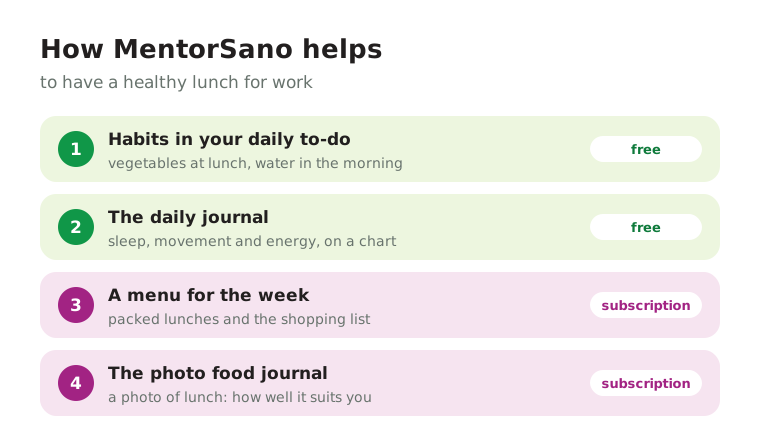
- For free, your daily to-do gives you small habits to tick off: vegetables at lunch, water in the morning, an earlier dinner.
- The daily journal, also free, records your sleep, movement and energy in a minute or two. After a few weeks, the chart shows whether your afternoons are getting better.
- With the subscription you get a menu for the week, built around your tastes and schedule, with lunches you can take to work. The shopping list comes with the menu.
- The photo food journal, with the subscription: take a photo of your canteen lunch and see how well it suits you and what you could change next time.
You can start without paying anything: create your free MentorSano account, fill in the 15-minute questionnaire and tick off your first habits in your daily to-do. The menu comes only if you want it, with the subscription.
What goes in your lunch box next week?
A simple plan for five working days, from two cooking sessions:
| Day | Lunch |
|---|---|
| Monday | oven-baked chicken with vegetables and brown rice, from Sunday's dinner |
| Tuesday | chickpea salad with tuna, tomatoes and cucumber |
| Wednesday | lentil soup and a slice of wholemeal bread |
| Thursday | buckwheat with roasted vegetables and two boiled eggs |
| Friday | from the canteen: a main dish with vegetables, no chips |
On Sunday you cook the chicken, rice and vegetables. On Wednesday evening you make the soup. The rest comes together in a few minutes.
When to see a doctor
Sleepiness after lunch is usually normal. Still, see your GP if:
- you're tired all day, not just after eating, for several weeks;
- you fall asleep without meaning to, while driving or in meetings;
- you're very thirsty, pee often or have lost weight for no reason;
- you feel dizzy, shaky or sweaty when a meal is late;
- you have diabetes and the sleepiness after meals is new or stronger.
Frequently asked questions
What should I eat for lunch at work so I don't get sleepy?
A lunch that's half vegetables, a quarter protein and a quarter whole grains, in a moderate portion. Very high-carbohydrate lunches, such as a pastry and a white-bread sandwich, make afternoon sleepiness worse.
Why am I sleepy after lunch even when I've slept well?
Mid-afternoon is a time when your body tends to feel sleepier anyway, even without lunch. A large, high-carbohydrate lunch makes it stronger.
Is a sandwich a healthy lunch?
It can be, if it's on wholemeal bread, has a lean protein such as egg, chicken or tuna, and plenty of salad. White bread with salami and mayonnaise has less fibre and more salt.
How long does a packed lunch keep?
Put the box in the fridge as soon as you get to work and eat it the same day. Cool cooked leftovers quickly and keep them in the fridge, not at room temperature.
Is it OK to skip lunch?
It usually doesn't help. Many people end up very hungry by the evening and reach for sweet or salty snacks. A smaller but regular lunch is easier to stick to.
What snack can I have at work instead of pastries?
Plain yoghurt with a piece of fruit, a handful of nuts, chopped raw vegetables or a slice of wholemeal bread with cheese. They have more protein or fibre and keep you full for longer.
Start from where you are today
MentorSano brings together your blood tests, sleep, meals, movement and habits, and Adrian Ienin checks your plan before it reaches you.
- 15-minute questionnaire
- Blood tests, explained
- Daily journal
- Lesson of the day
- An expert by your side
Adrian Ienin
Naturopathic pharmacist, nutrition and holistic health consultant, co-founder of MentorSano. He checks the articles here and the plans in the platform before they reach people.