Healthy eating on a budget: what to buy and cook when money is tight
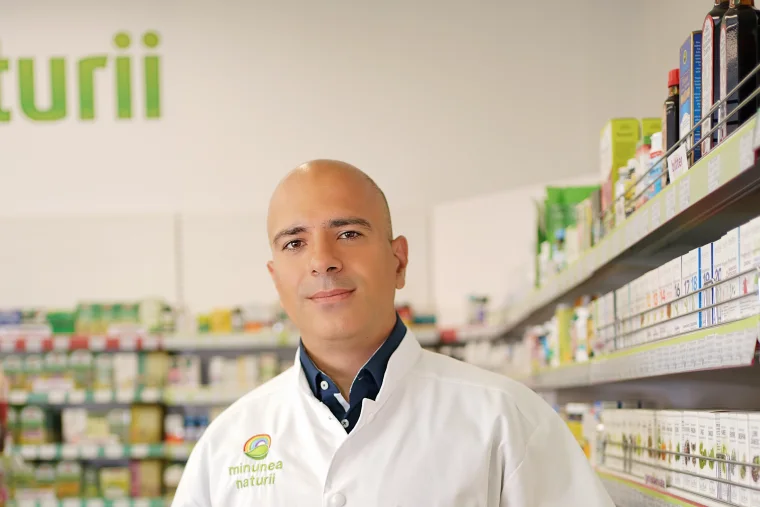 Checked by Adrian Ienin, pharmacist · updated
Healthy eating on a budget usually means ordinary foods, not special products: dried lentils, chickpeas and beans, oats, eggs, seasonal and frozen vegetables, tinned sardines or mackerel. Money goes on products "with benefits", on small portions and on what you throw away. Compare the price per kilogram, cook once for three meals and eat leftovers within two days.
Want to see what this means for you? Start for free →
Why does healthy food seem so expensive?
When you think of "healthy food", you probably picture the products on the special shelf: exotic seeds, protein bars, gluten-free bread, cold-pressed juices. They really are expensive. But you don't need them to eat well.
The World Health Organization describes a healthy diet in ordinary terms: vegetables, fruit, pulses (lentils, chickpeas, beans), whole grains such as oats and brown rice, little salt and little added sugar. Most of these are among the cheapest foods in the shop.
What usually makes the shopping basket expensive is three things: processed products "with benefits", small portions in nice packaging, and food that goes off in the fridge before you eat it. You can avoid all three.
Which foods are cheap and healthy?
The list below is the base of a cheap kitchen. You don't need all of it. Pick 5–6 foods you enjoy and build your meals around them.
| Food | Why it's worth it | How to use it |
|---|---|---|
| Lentils, chickpeas, dried beans | protein and fibre, keep for months | soups, stews, salads, hummus |
| Plain oats | a whole grain, ready in 5 minutes | porridge, pancakes, in meatballs instead of breadcrumbs |
| Eggs | complete protein, quick to cook | omelette with vegetables, boiled eggs to take to work |
| Seasonal vegetables | cheaper and tastier in season | tomatoes, peppers and courgettes in summer; cabbage, carrots, beetroot and onions in winter |
| Frozen vegetables and fruit | don't go off, you take only what you need | spinach, peas, broccoli, berries in porridge |
| Tinned fish | sardines and mackerel are oily fish | on toast, in salads, in pasta |
| Potatoes, rice, buckwheat, pasta | a cheap base for dozens of meals | a quarter of the plate, next to vegetables and protein |
| Plain yoghurt in a large pot | cheaper than small fruit yoghurts | with oats and fruit, or as a salad dressing |
The NHS is clear that frozen and tinned fruit and vegetables count towards your 5 A Day just the same, on one condition: tinned ones should be in water or natural juice, with no added salt or sugar. A portion is 80g.
For fish, the NHS recommends at least 2 portions a week, including 1 of oily fish. Tinned sardines, mackerel and herring count here. Tuna, fresh or tinned, doesn't count as oily fish, although it's still a good protein.
How do you compare prices to see what's really cheap?
The price on the pack can mislead you. Look at the price per kilogram, in the small print on the shelf label. A few comparisons usually hold true, however much prices change:
- Dried pulses cost less than tinned ones. Beans and chickpeas grow a lot when cooked, so a one-kilogram bag makes many portions. Tins are still handy on busy evenings.
- Plain oats are much cheaper than breakfast cereals and don't have their added sugar.
- Cabbage, carrots, onions and potatoes are almost always among the cheapest vegetables per kilogram.
- The big pack isn't always cheaper. Check. And if you throw half of it away, you haven't saved anything.
More useful than the price per kilogram is the price per portion. A bag of lentils that makes eight portions can cost the same as one ready meal for a single dinner.
What isn't worth paying extra for?
| You pay more for | The cheaper alternative |
|---|---|
| "superfoods" and exotic seeds | sunflower seeds, walnuts in a large bag, cabbage, carrots |
| "protein" or "fitness" products | eggs, plain yoghurt, lentils, cottage cheese |
| pre-washed, pre-cut vegetables | the same vegetables whole, cut by you |
| small, individually wrapped portions | the big pack, split into boxes at home |
| fruit juice | whole fruit, which also has the fibre |
| "gluten-free" products, if you don't have coeliac disease | ordinary wholegrain bread and pasta |
| fresh berries in winter | frozen berries |
There's nothing wrong with the products in the left column. They just don't make you eat more healthily than the ones on the right. If you want to see quickly what's in a product "with benefits", check the back of the pack, as explained in the article on how to read food labels.
How do you batch cook without getting bored of the same food?
Cooking once for three meals is the simplest way to spend less. You use less electricity or gas, you buy bigger packs and you don't order a takeaway on the evening you're tired.
- Make a base, not a fixed dish. A big pot of lentils cooked with onion and carrot becomes soup on Monday, a stew with rice on Tuesday and a salad with vegetables on Wednesday.
- Split it into portions straight after cooking. The Food Standards Agency (FSA) recommends putting cooked food in the fridge within one to two hours. Small portions cool faster.
- Eat leftovers within two days or freeze them, again following the FSA.
- Keep two or three portions in the freezer for evenings when you don't cook at all. One ready portion means one takeaway less.
Meal ideas you can repeat and how to plan your week are in the article on healthy meal ideas.
What do you do with leftovers so you don't throw money away?
Food thrown away is money thrown away. A few simple moves:
- Vegetables that are starting to go soft go into soup, a stew or an omelette.
- Leftover rice or buckwheat becomes a salad or a pan of vegetables with an egg.
- Stale bread becomes oven-baked croutons, or goes in the freezer slice by slice.
- Overripe bananas go into porridge or pancakes.
- Put what needs eating soon at the front of the fridge, where you can see it.
What meals can you make for healthy eating on a budget?
The meals below use almost only the foods in the first table. The cost is relative, compared with a takeaway or a ready meal.
| Meal | What you make it from | Relative cost |
|---|---|---|
| Porridge with yoghurt and frozen fruit | oats, plain yoghurt, berries | very low |
| Lentil and vegetable soup | lentils, carrot, onion, celery, tinned tomatoes | very low, for 3 days |
| Omelette with frozen spinach and wholemeal bread | eggs, spinach, bread | low |
| Bean dip or bean stew with cabbage salad | dried beans, onion, cabbage, carrot | very low |
| Wholewheat pasta with sardines, tomatoes and peas | pasta, a tin of sardines, tomatoes, frozen peas | low |
| Oven-baked potatoes with chickpeas and seasonal vegetables | potatoes, chickpeas, whatever vegetables are in season | low |
| Buckwheat pilaf with mushrooms and egg | buckwheat, mushrooms, onion, egg | low |
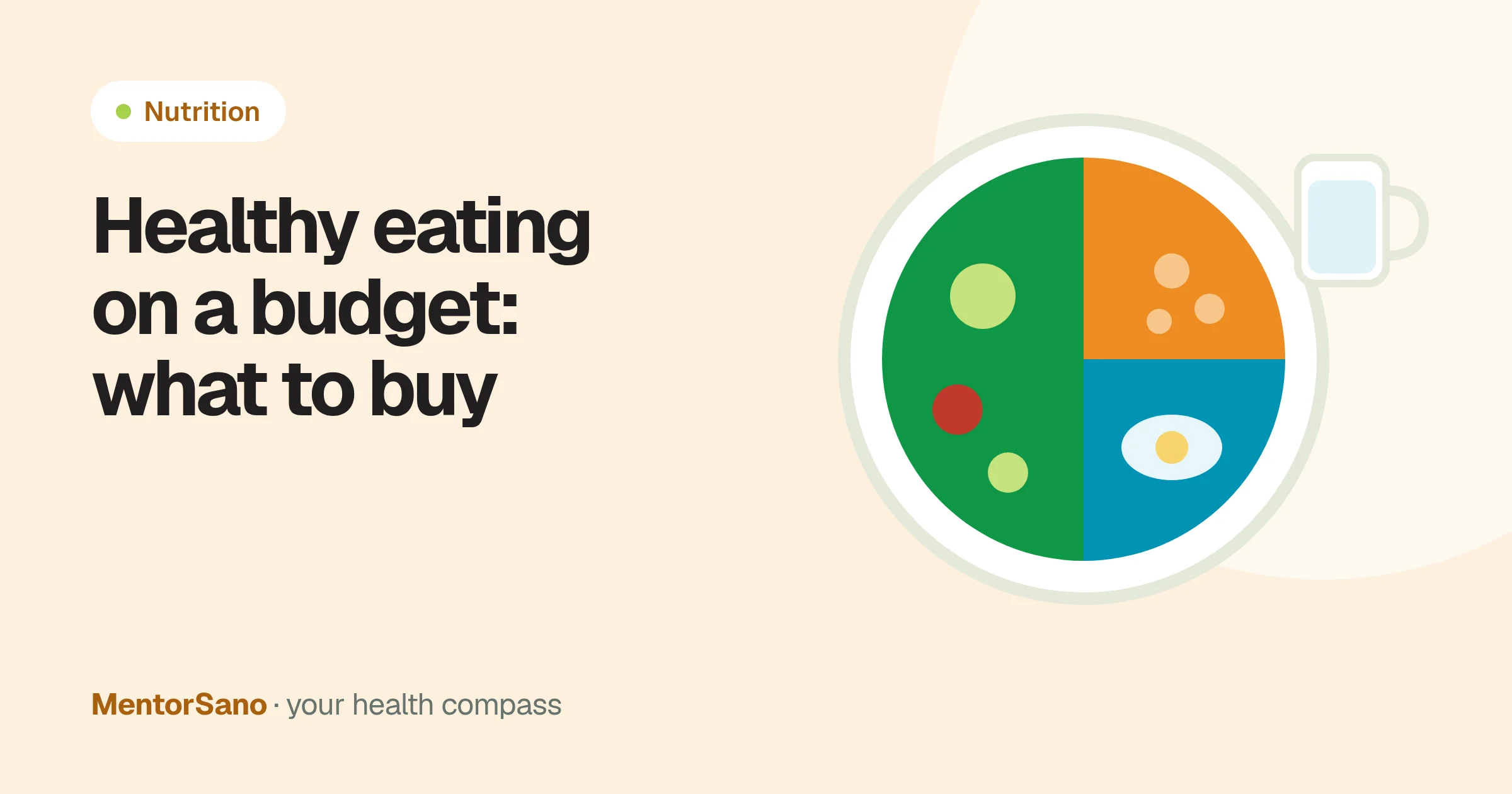
Each meal follows the plate rule: about half vegetables, a quarter protein, a quarter grains or potatoes.
How does MentorSano help with healthy eating on a budget?
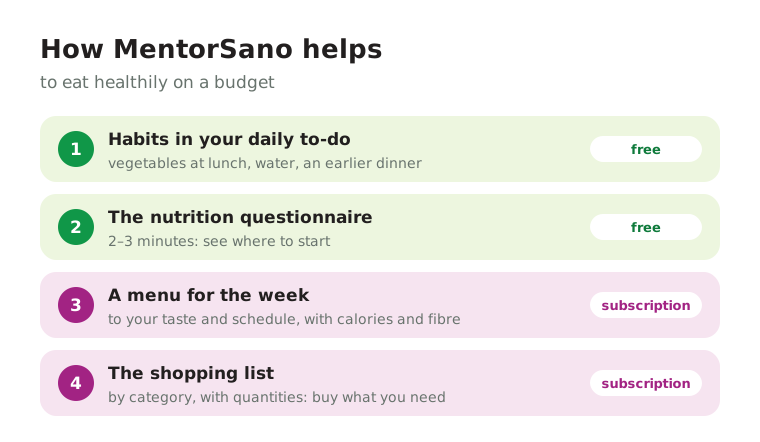
- For free, your daily to-do gives you small habits to tick off that change what you eat: vegetables at lunch, water in the morning, an earlier dinner.
- For free, the short nutrition questionnaire shows you in two or three minutes where to start.
- With the subscription you get a menu for the week, built around your tastes, preferences and schedule, with calories, protein, fat, carbohydrates and fibre for every meal. It's normal food that's easy to make.
- The shopping list comes with the menu, by category and with quantities, so you buy what you need for that week's meals.
Start with the free part: create your free MentorSano account, fill in the questionnaire and see which habits suit you. The menu and the list come only if you want them, with the subscription.
What can you change this week?
- Buy a bag of dried lentils or chickpeas and cook a big pot of it at the weekend.
- Put a bag of vegetables and a bag of berries in the freezer. Use them when the fridge is empty.
- Swap one expensive product in your basket for its alternative from the table.
- Check the fridge before you shop and start your list from what needs eating soon. How to write the rest of the list, aisle by aisle, is in the article on the healthy shopping list.
When to see a doctor
How you save money on food isn't a medical matter. Still, see your GP or a dietitian if:
- you have diabetes, kidney or heart disease and need a diet with strict rules;
- you have food allergies or coeliac disease and don't know which cheap alternatives you can use;
- you've lost a lot of weight without trying or always feel low on energy;
- you often skip meals because you can't afford food. Your GP or a social worker can point you towards help.
Frequently asked questions
Can you eat healthily on little money?
Yes. Most of the foods the WHO recommends are cheap: pulses, oats, seasonal vegetables, potatoes, eggs. What's expensive is mostly processed products sold as "healthy", which you don't need.
Are frozen vegetables as healthy as fresh ones?
Yes. The NHS counts them towards your 5 A Day just the same. They also don't go off, and you take only what you need from the bag.
What is the cheapest source of protein?
Dried pulses (lentils, chickpeas, beans) and eggs are usually the cheapest. Next come plain yoghurt, cottage cheese and tinned fish.
Is tinned fish a good choice?
Yes, especially sardines, mackerel and herring, which are oily fish. The NHS recommends at least 2 portions of fish a week, including 1 of oily fish. Tinned tuna doesn't count as oily fish.
How long can I keep leftovers in the fridge?
The Food Standards Agency recommends eating them within two days or freezing them. Put cooked food in the fridge within one to two hours of cooking.
Is organic food worth it if money is tight?
If your budget is tight, more ordinary vegetables and fruit help you more than fewer organic ones. Wash them well and eat a variety.
Start from where you are today
MentorSano brings together your blood tests, sleep, meals, movement and habits, and Adrian Ienin checks your plan before it reaches you.
- 15-minute questionnaire
- Blood tests, explained
- Daily journal
- Lesson of the day
- An expert by your side
Adrian Ienin
Naturopathic pharmacist, nutrition and holistic health consultant, co-founder of MentorSano. He checks the articles here and the plans in the platform before they reach people. About Adrian and how we write our articles →