High cholesterol on a blood test: what it means and what to do now
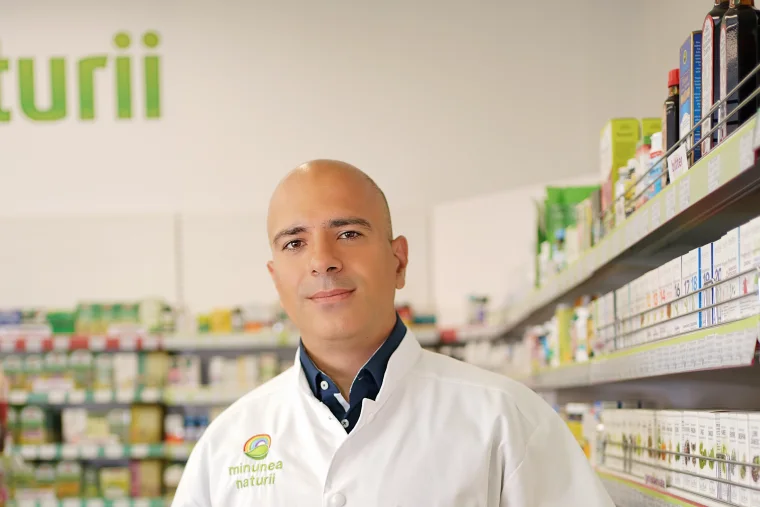 Checked by Adrian Ienin, pharmacist · updated
High cholesterol on a blood test usually means LDL above target, sometimes with high triglycerides or low HDL. It causes no symptoms, but over time it raises the risk of heart attack and stroke. Less saturated fat, more fibre, 150 minutes of exercise a week, no smoking and less alcohol lower the values for many people. Your doctor decides on treatment based on your overall risk, not on a single number.
Want to see what this means for you? Start for free →
What does high cholesterol on your blood test mean?
You've got your results back, and there's a line in red next to cholesterol, LDL or triglycerides. Nothing hurts and you feel the same as yesterday, yet the value is above the range. The natural question is: what do I do now?
High cholesterol doesn't cause symptoms. The NHS says you can only find out you have it from a blood test. That's why many people discover it at a routine check-up or in tests done for something else.
Cholesterol itself isn't the enemy. Your body needs it to build cell membranes, some hormones and vitamin D. The problem starts when too much of the type that builds up in the artery walls is circulating in your blood. Over time, the build-up narrows the blood vessels and raises the risk of heart attack and stroke.
A single result doesn't tell the whole story. What matters is which type of cholesterol is high, how high it is and what other risk factors you have: age, blood pressure, smoking, diabetes and family history.
What do LDL, HDL and triglycerides mean?
On your report, cholesterol usually appears on several lines. Each one tells you something different:
- Total cholesterol is the sum. On its own it says little, because it adds up the good part and the part that does harm.
- LDL is the cholesterol that builds up in the blood vessels. It's called "bad cholesterol", and doctors look at it first.
- HDL carries extra cholesterol back to the liver. Here a higher value is better.
- Triglycerides aren't cholesterol but fats in the blood. They go up with sugar, alcohol, large meals and extra weight.
- Non-HDL is total cholesterol minus HDL. Some labs report it separately, because it adds up everything that can build up.
| Test | Desirable level in adults (mg/dL) |
|---|---|
| Total cholesterol | below 200 |
| LDL | below 100, for people at low risk |
| Non-HDL | below 130 |
| HDL | 40 or more in men, 50 or more in women; 60 or more is best |
| Triglycerides | below 150; 150–199 borderline; 200–499 high; 500 or more very high |
These figures come from the US National Library of Medicine (MedlinePlus). In the UK, results are given in mmol/L. There the NHS uses total cholesterol below 5, non-HDL below 4 and HDL above 1.0 for men and above 1.2 for women as a guide.
The LDL target isn't the same for everyone. MedlinePlus gives 100 mg/dL or less for low risk and 70 or less for people at high risk or who already have heart disease. That's why an LDL value can be fine for you and too high for your neighbour.
Why does cholesterol go up?
The NHS lists the usual causes: food high in fat, especially saturated fat, too little exercise, being overweight, smoking and alcohol. For some people genes matter a lot. In familial hypercholesterolaemia, for example, LDL is high from a young age, even in slim people who eat carefully.
A few other things can push the values up, and they're worth mentioning to your doctor:
- an underactive thyroid;
- diabetes or high blood sugar;
- some kidney or liver conditions;
- some medicines;
- for triglycerides, a heavy meal or alcohol the evening before the test.
What can you change yourself, starting this week?
Habits mainly affect LDL and triglycerides. The table below follows the NHS advice on lowering cholesterol:
| What you change | What it looks like in practice |
|---|---|
| Less saturated fat | fewer processed meats, sausages, fatty meat, butter, cream, full-fat cheese, cakes and biscuits |
| Better fats instead | olive or rapeseed oil, nuts and seeds, oily fish such as mackerel or salmon |
| More fibre | wholegrain bread, brown rice, wholewheat pasta, vegetables and fruit at every meal |
| Exercise every week | at least 150 minutes of moderate activity, such as brisk walking, or 75 minutes of vigorous activity |
| No smoking | smoking raises cholesterol and the risk of heart attack, separately from cholesterol |
| Less alcohol | the NHS advises no more than 14 units a week, spread over several days |
You don't have to change everything in one week. Pick two rows from the table that you can keep up for months. For example: use olive oil instead of butter and walk for 30 minutes on five days out of seven. That already adds up to 150 minutes.
Read labels too. Saturated fat is listed separately in the nutrition table. Products with coconut or palm oil usually contain a lot.
When does your doctor decide on treatment?
Your doctor doesn't look at LDL alone. The European guidelines on dyslipidaemia (European Society of Cardiology and European Atherosclerosis Society, 2019) say the decision should start from your overall risk: age, sex, blood pressure, smoking, diabetes, kidney disease and family history.
- If your risk is low and LDL is a little above the range, the usual first step is to change habits, then repeat the tests.
- If your risk is high, you've already had a heart attack or stroke, you have diabetes or your LDL is very high, your doctor may suggest treatment from the start, alongside habits.
- If you already take treatment, habits stay just as important. MedlinePlus says clearly that lifestyle changes continue alongside medicines.
Don't start or stop a cholesterol medicine on your own. If you have questions about treatment, write them down and take them to your appointment.
How does MentorSano help if you have high cholesterol?
MentorSano doesn't diagnose and doesn't prescribe. It helps you do, day by day, the habit part your doctor recommends too, and see whether anything moves in your results.
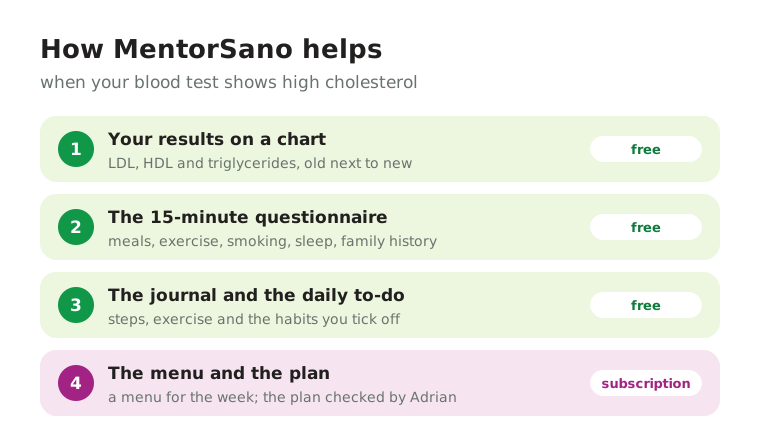
- You upload your blood tests and LDL, HDL and triglycerides appear on a chart, old next to new. You see whether the changes of the last few months have moved the values.
- The 15-minute questionnaire asks about meals, exercise, smoking, sleep and family history. Your answers stay in your account, ready for when you see your doctor.
- The daily journal and the daily to-do keep track of your steps, exercise and the habits you tick off, such as vegetables at lunch or an evening walk.
- With the subscription you get a menu for the week, to your taste and schedule, with a shopping list. The "What matters now" plan is checked by Adrian Ienin, a pharmacist, and gives you one step a week.
To see your cholesterol on a chart, create your free MentorSano account. Uploading your results, the questionnaire and the journal are free.
When do you repeat the test, and how do you do it right?
Your doctor will tell you when to repeat your lipid profile. After a change in habits, it's often repeated after a few months, so the effect has time to show.
- Have the test under similar conditions each time, at the same lab if you can.
- Ask whether you need to fast. The NHS says it makes little difference for cholesterol, but for triglycerides MedlinePlus sometimes mentions fasting for 9–12 hours.
- Don't drink alcohol or eat a very heavy dinner the evening before. Triglycerides can come out higher just because of it.
- Put your reports side by side. The trend from one test to the next says more than a single value.
When to see a doctor
- Your LDL or total cholesterol comes out very high, for example LDL above 190 mg/dL.
- Your parents or siblings had a heart attack or stroke at a young age.
- Your triglycerides come out above 500 mg/dL.
- You also have high blood pressure, diabetes or kidney disease.
- You feel pain or pressure in your chest, breathlessness on effort, or sudden numbness of the face or an arm. These are emergencies: call 999 or 112.
Frequently asked questions
What cholesterol level is dangerous?
There isn't one number for everyone. As a guide, MedlinePlus gives total cholesterol below 200 mg/dL and LDL below 100 for low risk. Your doctor will tell you your target, based on age, blood pressure, smoking, diabetes and family history.
Can I lower cholesterol without tablets?
For many people, yes, especially when the value is just above the range and the overall risk is low. Meals with less saturated fat and more fibre, exercise and stopping smoking help. If your risk is high, your doctor may also suggest treatment.
Do I need to fast for a cholesterol test?
The NHS says it makes little difference for cholesterol whether you've eaten. For triglycerides, some labs ask for 9–12 hours of fasting. Ask the lab or your doctor what you need.
What does low HDL mean?
HDL carries extra cholesterol back to the liver, so a low value is less good. MedlinePlus considers HDL low below 40 mg/dL in men and below 50 in women. Exercise and stopping smoking can raise it.
Do eggs raise cholesterol?
For most people, the saturated fat in processed meat, fatty meat, butter and pastries matters more than eggs. If your cholesterol is high, talk to your doctor about how your meals look overall.
How fast does cholesterol come down after I change what I eat?
Changes usually show in blood tests after a few months. That's why your doctor often asks you to repeat the lipid profile after a period of new habits, not after a few days.
Start from where you are today
MentorSano brings together your blood tests, sleep, meals, movement and habits, and Adrian Ienin checks your plan before it reaches you.
- 15-minute questionnaire
- Blood tests, explained
- Daily journal
- Lesson of the day
- An expert by your side
Adrian Ienin
Naturopathic pharmacist, nutrition and holistic health consultant, co-founder of MentorSano. He checks the articles here and the plans in the platform before they reach people.