High fasting blood sugar: do I have diabetes or not?
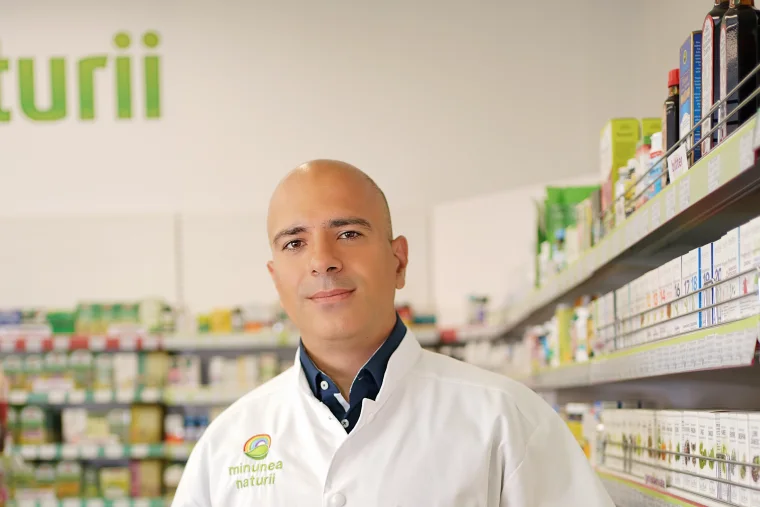 Checked by Adrian Ienin, pharmacist · updated
High fasting blood sugar, between 100 and 125 mg/dL, falls in the prediabetes range, not diabetes. Diabetes is discussed from 126 mg/dL upwards and is confirmed by a second test, usually HbA1c. A result can also come out high after a bad night, stress or not fasting fully. Walking after meals, fewer sugary drinks and more fibre lower blood sugar for many people.
Want to see what this means for you? Start for free →
High fasting blood sugar: do I have diabetes?
You had your blood test in the morning, and your glucose came out at 105, 112 or 120 mg/dL. On the report it's in red or has an asterisk. The first question is simple: do I have diabetes?
A single result between 100 and 125 mg/dL doesn't mean diabetes. It means your blood sugar is higher than normal and it's worth finding out why. The US National Institute of Diabetes (NIDDK) says your doctor will usually use a second test to confirm a diagnosis.
Fasting blood glucose measures the sugar in your blood at one moment, after at least 8 hours without food or drinks other than water. The value can change from one day to the next. That's why a result means more when it's put next to others.
What does your result mean, by range?
| Test | Normal | Prediabetes | Diabetes |
|---|---|---|---|
| Fasting blood glucose | 99 mg/dL or below | 100–125 mg/dL | 126 mg/dL or above |
| HbA1c | below 5.7% | 5.7–6.4% | 6.5% or above |
| Glucose 2 hours into a glucose tolerance test | 139 mg/dL or below | 140–199 mg/dL | 200 mg/dL or above |
These are the American Diabetes Association's thresholds, also used by NIDDK. The World Health Organization sets the threshold for "impaired fasting glucose" at 110 mg/dL, not 100. This is also why the reference range on your report differs from one lab to another. In the UK, results are given in mmol/L: 100 mg/dL is about 5.6 mmol/L and 126 mg/dL is 7.0 mmol/L.
Back to the question at the start: a fasting glucose of 105–120 mg/dL falls in the prediabetes range by the American thresholds. Diabetes is discussed from 126 mg/dL upwards, confirmed by a second test.
Why can fasting blood sugar come out high without it being diabetes?
Morning blood sugar is sensitive to what happened the day or night before. It can come out higher than usual for you if:
- you weren't really fasting: a coffee with sugar or milk, a juice, a late snack after midnight;
- you slept badly or very little;
- you're stressed, including by the trip to the lab or a fear of needles;
- you have a cold or an infection;
- you take certain medicines, such as steroids;
- you have a thyroid problem. MedlinePlus lists an overactive thyroid among the causes of high blood glucose.
That doesn't mean the value is wrong. It means one test isn't enough to draw a conclusion, either good or bad.
Why is the test repeated, and how does it link to HbA1c?
For a diagnosis, the American Diabetes Association asks for two results above the threshold. They can come from the same test repeated or from two different tests. The exception is someone with clear symptoms and a very high blood sugar.
The most common second test is HbA1c. It shows your average blood sugar over roughly the last three months, so one bad night or a late dinner won't spoil it. If your glucose is 112 mg/dL and your HbA1c is 5.4%, the picture looks different than if your HbA1c is 6.1%.
Sometimes your doctor asks for a glucose tolerance test: you drink a sugary solution and your blood sugar is measured again two hours later. The test shows how your body copes with a load of sugar.
What can you do from tomorrow about high fasting blood sugar?
Prediabetes doesn't usually cause symptoms, but it's the point where changing habits has the biggest effect. The NHS says exercise, a healthy weight and meals with less sugar and more fibre can delay or prevent type 2 diabetes.
| What you do | Why it helps |
|---|---|
| Walk for 10–15 minutes after your main meal | your muscles use the glucose in your blood |
| Cut out fizzy drinks and sweetened drinks | liquid sugar raises blood sugar quickly and doesn't fill you up |
| Fill half your plate with vegetables | fibre slows the rise in blood sugar after a meal |
| Choose wholegrain bread and pasta | they're digested more slowly than white ones |
| Sleep 7–9 hours, at regular times | short sleep makes your body less sensitive to insulin |
| Lose a few kilos, if you're carrying extra weight | even a small loss improves blood sugar |
Pick two things you can keep up. You don't need a strict diet. What counts is doing them every day, for months.
To repeat the test properly, fast for at least 8 hours, with water only. Don't change anything special the day before, either for better or worse. You want to see your usual blood sugar, not the blood sugar after a day of fasting or a big dinner.
How does MentorSano help when you have high fasting blood sugar?
MentorSano doesn't diagnose. It helps you put your blood sugar next to your other results and your habits, so you know what to ask your doctor and what to change before the next test.
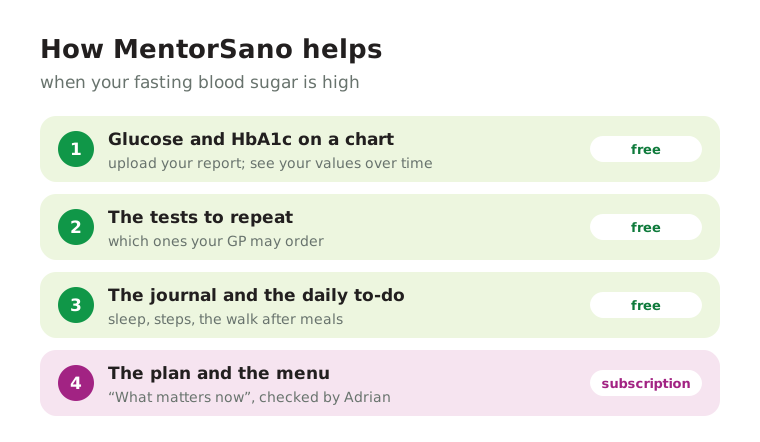
- You upload your blood tests and your glucose and HbA1c appear on the same chart, report after report. You see whether the value is going up, staying put or coming down.
- After the 15-minute questionnaire you get your list of recommended tests. You find out which are worth repeating and which your GP may be able to order.
- The daily journal and the daily to-do keep track of your sleep, steps and habits such as a walk after meals, in a minute or two a day.
- With the subscription, AI reads your results together with your answers and journal, and Adrian Ienin, a pharmacist, checks the "What matters now" plan. You also get a menu for the week, to your taste and schedule.
To see your blood sugar on a chart, create your free MentorSano account. Uploading your results, the questionnaire and the journal are free.
What should you ask your GP?
Take your new report to the appointment and, if you have them, your old results too. A few useful questions:
- "Does my result mean prediabetes, or does it need confirming?"
- "Should I also have an HbA1c test?"
- "When should I repeat the test?"
- "Can the medicines I take raise my blood sugar?"
Also tell them if diabetes runs in your family, if you had diabetes in pregnancy or if you have high blood pressure. All of these change how often your blood sugar is worth checking.
When to see a doctor
- Your fasting blood glucose comes out at 126 mg/dL or more.
- You're very thirsty, pee often, especially at night, have blurred vision or lose weight without trying.
- You have cuts or wounds that take a long time to close, or infections that keep coming back.
- Diabetes runs in your family or you had diabetes in pregnancy, and your glucose comes out above 100 mg/dL.
- Your blood sugar comes out high in two tests in a row, even if you feel well.
Frequently asked questions
Is a fasting glucose of 110 diabetes?
No. By the American Diabetes Association's thresholds, 100–125 mg/dL means prediabetes. Diabetes is discussed from 126 mg/dL, confirmed by a second test. Your doctor will tell you what your result means for you.
Why is the range on my report different from one lab to another?
Labs use different methods and references. Some follow the American threshold of 100 mg/dL, others the World Health Organization's threshold of 110 mg/dL. Your doctor makes the diagnosis, not the colour on the report.
Can my blood sugar be high just because of stress?
Stress, poor sleep, an infection or certain medicines can raise morning blood sugar. That's why one result isn't enough for a conclusion and the test is repeated.
Which is more reliable, glucose or HbA1c?
Each shows something different. Glucose shows one moment, HbA1c shows the average over roughly the last three months. Doctors usually read them together.
Does prediabetes go away?
For many people, the values come down with exercise, meals with less sugar and more fibre, and losing a few kilos if needed. The NHS says these changes can delay or prevent type 2 diabetes.
How often should I recheck my blood sugar if I have prediabetes?
Usually once a year or more often, as your doctor decides. If you've changed your habits, they may ask for the test sooner to see the effect.
Start from where you are today
MentorSano brings together your blood tests, sleep, meals, movement and habits, and Adrian Ienin checks your plan before it reaches you.
- 15-minute questionnaire
- Blood tests, explained
- Daily journal
- Lesson of the day
- An expert by your side
Adrian Ienin
Naturopathic pharmacist, nutrition and holistic health consultant, co-founder of MentorSano. He checks the articles here and the plans in the platform before they reach people.