Cutting down on alcohol: how to shrink your evening drink, step by step
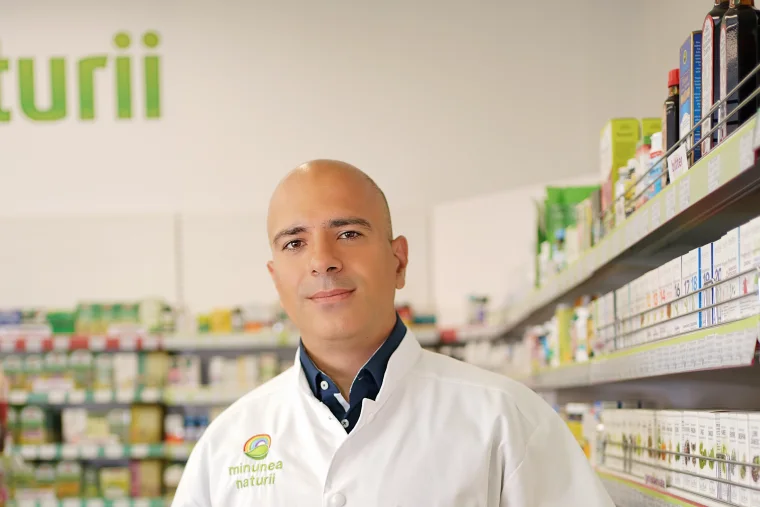 Checked by Adrian Ienin, pharmacist · updated
Cutting down on alcohol doesn't mean changing everything from tomorrow. The World Health Organization says there is no amount of alcohol that carries no risk to health, and the risk rises with the amount. An evening drink helps you fall asleep, but stops you sleeping deeply. Small steps work well: a few drink-free days a week, smaller glasses, water in between, and another habit that marks the end of the day.
Want to see what this means for you? Start for free →
Why is the evening drink so hard to give up?
The day is over, the emails are done, the house is quiet. A glass of wine or a beer is the signal that this is your time now. One often leads to a second. You don't think of yourself as someone who drinks a lot, but you've noticed it happens almost every evening and you'd like to cut down.
Alcohol relaxes you quickly, and the brain learns the link: evening, sofa, glass. Over time, the drink stops being a choice and becomes part of the evening, like brushing your teeth. That's why "from tomorrow I'll stop" rarely lasts: you take a piece out of your evening routine and put nothing in its place.
What does the WHO say about alcohol and risk?
In 2023, the World Health Organization's European office published a clear statement: there is no amount of alcohol that can be said not to affect health. A few points from it:
- alcohol is classed as a Group 1 carcinogen, the same group as tobacco and asbestos;
- it causes at least seven types of cancer, including bowel cancer and breast cancer in women;
- the risk rises with the amount, but it doesn't start at a threshold: it starts with the first drink;
- in the WHO European Region, around half of alcohol-related cancers occur in people who don't drink heavily;
- it doesn't matter whether it's expensive wine or beer: the risk comes from the alcohol, not the type of drink.
This isn't a reason to panic, and it isn't a judgement. It's the reason every drink less counts, even if you don't stop completely.
What is a unit of alcohol?
The NHS counts alcohol in units. One unit is 10ml or 8g of pure alcohol, roughly what an adult can process in an hour. The sum is simple: strength (ABV, in %) times volume (in ml), divided by 1,000.
| Drink | Units |
|---|---|
| a single small shot of spirits (25ml, 40%) | 1 |
| a small glass of wine (125ml, 12%) | 1.5 |
| a bottle of beer (330ml, 5%) | 1.7 |
| a standard glass of wine (175ml, 12%) | 2.1 |
| a can of beer (440ml, 5.5%) | 2.4 |
| a large glass of wine (250ml, 12%) | 3 |
| a bottle of wine (750ml, 13.5%) | 10 |
The NHS advises not regularly drinking more than 14 units a week, spread over 3 or more days, and having several drink-free days each week. This limit means low risk, not zero risk.
The sum for "a glass or two in the evening": two standard glasses of wine come to about 4.2 units. Seven evenings a week make almost 30 units, double the NHS limit.
What does alcohol do to your sleep?
An evening drink seems to help you fall asleep, and for some people it does. But the NHS explains that alcohol disrupts your sleep pattern and stops you sleeping deeply. You fall asleep faster but wake up more tired. The next day you have less energy, and in the evening you look for something to relax you again.
The NHS lists among the immediate effects of cutting down feeling better in the mornings, being less tired during the day, having more energy and finding your weight easier to manage. In the long term, the risk of cancer, diabetes, stroke and heart, liver and kidney problems goes down.
How do you go about cutting down on alcohol, step by step?
The NHS tips for cutting down are practical and you can start them tomorrow:
- Set a limit before you start. "One glass tonight", decided before you open the bottle, not after the first glass.
- Choose the smaller glass. A small glass of wine instead of a large one, a bottle of beer instead of a large can.
- Choose a lower strength. Check the percentage on the label. The difference between an 11% wine and a 14% one adds up.
- Eat first and drink water. A glass of water before, and one between drinks.
- Keep drink-free days. Several every week. Start with two fixed evenings, for example Monday and Tuesday.
- Tell someone. A partner or friend who knows what you're trying can support you, especially on nights out.
- Take it a day at a time. Every evening you drink less is already a step taken.
What can you put in place of the evening drink?
If the drink marked the end of the day, you need another signal. A few ideas:
- a drink that feels special: sparkling water with lemon and ice in a nice glass, or a cup of tea;
- a warm shower or a short walk after dinner;
- ten minutes writing down how the day went;
- something that keeps your hands busy: cooking for tomorrow, a book, a game with the children.
Look, too, at what makes you need to relax so much. If the drink is the only quiet moment in a full day, it's worth taking a real break earlier, not just in the evening.
How does MentorSano help you drink less?
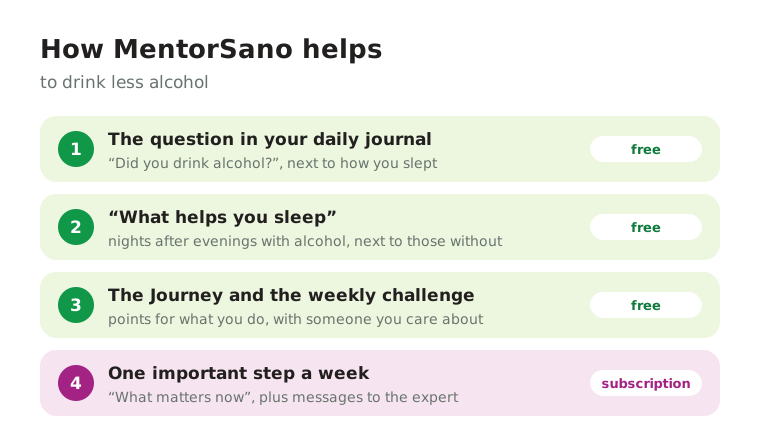
MentorSano doesn't judge you. It helps you see the link between the drink and your sleep and keep the steps small:
- For free, the daily journal asks whether you drank alcohol last night, next to the questions about how you slept and how you feel.
- For free, in Progress, "What helps you sleep" puts the nights after evenings with alcohol next to those without, once you have at least four of each.
- For free, the Journey gives you points for what you do and a weekly challenge, and you can invite someone you care about to join you.
- With the subscription, you get "What matters now": one important step a week, checked by pharmacist Adrian Ienin, whom you can message directly.
Create your free MentorSano account and note how you slept from the very first morning.
What does the first month of cutting down on alcohol look like?
- Week 1: just write down how much you drink, without changing anything, and add up the units.
- Week 2: two fixed evenings without alcohol.
- Week 3: on the evenings you drink, a single, smaller glass, with water alongside.
- Week 4: three or four evenings without alcohol and a new evening habit in place of the drink.
If one evening slips, you haven't lost what you've gained. Go back to the plan the next day. The whole week counts, not a single evening.
When to see a doctor
- You drink a lot every day and want to stop. Don't stop suddenly: if you're dependent, stopping overnight can be dangerous. Ask your GP for advice first; they can tell you how to cut down safely and whether you need medicine.
- On days without alcohol you have anxiety after waking, sweating, mild shaking or nausea in the morning. These can be signs of withdrawal.
- You have hallucinations, severe shaking or seizures after stopping alcohol. Call emergency services straight away (999 in the UK, 112 in the EU).
- You can't stop after the first drink, you need alcohol to get through the day, or you've tried to cut down several times without success.
- You drink to cope with sadness or anxiety, or you feel increasingly low.
- You take medicines, have liver disease, are pregnant or trying to get pregnant.
- You need support: your GP can point you to a local alcohol support service, and support groups such as Alcoholics Anonymous meet in many towns.
Frequently asked questions
Is a glass of wine a day healthy?
The WHO says there is no amount of alcohol that carries no risk to health. The risk rises with the amount, so one glass is better than two, and drink-free days are better still.
How many units are in a glass of wine?
According to the NHS, a standard glass of wine (175ml, 12%) has 2.1 units and a small one (125ml) has 1.5. A 750ml bottle at 13.5% has 10 units.
Why do I sleep worse after drinking?
Alcohol can help you fall asleep quickly, but it disrupts your sleep pattern and stops you sleeping deeply. That's why you wake up more tired, even after enough hours in bed.
How many drink-free days should I have a week?
The NHS recommends several drink-free days every week. An easy start is two fixed evenings, adding more over time.
Is it better to cut down gradually or stop completely?
If you have a glass or two in the evening, either can work. Many people find cutting down gradually easier to keep up. If you drink a lot every day, don't stop suddenly: talk to your GP first.
Does it matter whether I drink wine or beer?
Not really. The WHO says the risk comes from the alcohol, not the type of drink. What counts is how many units you have, so the volume and the strength.
Start from where you are today
MentorSano brings together your blood tests, sleep, meals, movement and habits, and Adrian Ienin checks your plan before it reaches you.
- 15-minute questionnaire
- Blood tests, explained
- Daily journal
- Lesson of the day
- An expert by your side
Adrian Ienin
Naturopathic pharmacist, nutrition and holistic health consultant, co-founder of MentorSano. He checks the articles here and the plans in the platform before they reach people. About Adrian and how we write our articles →